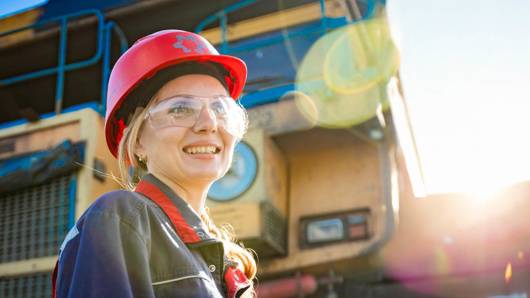

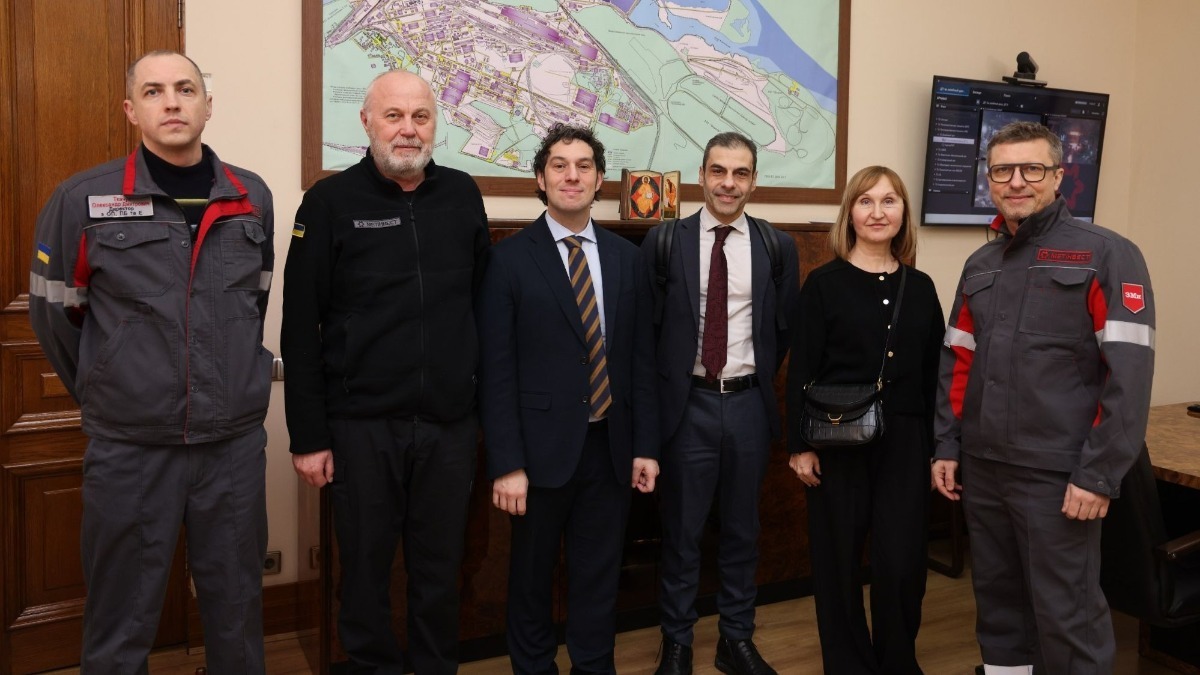
Kamet Steel became a platform for dialogue with European partners as the enterprise welcomed a delegation from the Delegation of the European Union to Ukraine. The visitors were introduced to the plant’s operations amid wartime conditions and unstable energy supplies, and saw first-hand how the facility continues production despite constant risks.
Like other enterprises in Metinvest Group, Kamet Steel operates in accordance with European standards. Looking ahead, it is planning a reconstruction programme, which, among other objectives, will create new opportunities for producing low-carbon steel.
The visit to the steelworks enabled the EU representatives to assess first-hand the resilience of Ukrainian industry. During discussions with Kamet Steel CEO Oleksandr Tretiakov and a tour of the production facilities, the delegation gained a comprehensive understanding of the enterprise’s operations. Despite energy shortages and complex logistics, the plant continues to fulfil its production targets daily in support of Ukraine’s economy.
Nicola SIBONA, head of the Trade and Economic Section of the Delegation of the European Union to Ukraine, said: “Our visit to Kamet Steel forms part of our direct and ongoing engagement with Ukrainian steel enterprises. It has given us the opportunity to hear first-hand about the conditions in which the sector is currently operating. We are sincerely grateful to the management for their hospitality and the opportunity to gain closer insight into the production facilities. During the visit, we were able to observe directly how production processes are adapting to current challenges, maintaining operational stability and continuing to manufacture products despite the difficulties. For us, this is a compelling illustration of how the entire community is demonstrating remarkable resilience and determination, as well as pragmatism in developing and implementing effective solutions under extremely challenging circumstances.”
The plant’s representatives also drew the attention of EU diplomats to the risks associated with the introduction of the Carbon Border Adjustment Mechanism (CBAM) for Ukraine. In the context of war, the CBAM creates additional financial and technical barriers for the Ukrainian steel industry, which is already operating at the limits of its capacity. The first impacts are already becoming apparent, including a reduction in EU purchases of Ukrainian rolled steel products and a decline in imports of pig iron and semi-finished products, as buyers shift towards alternative suppliers.
At Kamet Steel, it is believed that Ukraine requires special conditions to implement the mechanism. One possible solution would be to revise the approach to financing the decarbonisation of heavy industry. This would involve a model under which CBAM payments related to Ukrainian products are accumulated in dedicated accounts within the EU and channelled into decarbonisation projects for Ukrainian producers operating in line with European standards. Such an approach would help to mitigate the mechanism’s impact on Ukraine’s economy and preserve opportunities for industrial modernisation, while stimulating demand for European technologies and equipment.