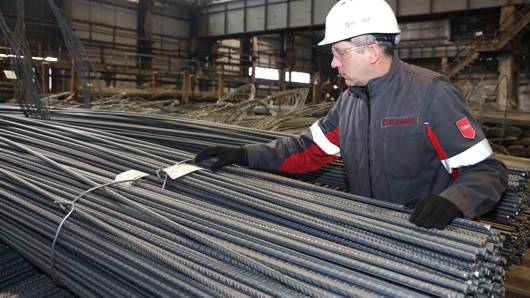

Greater reliability, longer service life: Kamet Steel’s Metallurgical Equipment Repair Shop has mastered a new technique – the refurbishment of hot metal ladle cars. This is aimed at maintaining the smooth operation of the blast furnace shop and will help to effectively refurbish critical equipment using own resources.
In this year the start of new services at Metallurgical Equipment Repair Shop began with mastering the repair of hot metal ladle cars. This is a strategic move: the stable operation of the blast furnace shop depends directly on the number of ladles in operation. As the need to repair such equipment has grown, whilst staff resources remain limited, the repair team has taken proactive action. The team’s initiative, supported by the plant’s management, will address the shortage of operational equipment and ensure the stability and productivity of hot metal production.
Under the repair technique, restoration work is carried out based on the results of defect detection, which is conducted jointly with specialists from the blast furnace shop. This allows for the precise identification of weak points and the scope of necessary repairs.
The main repair operations involve sealing cracks in the vertical walls of ladles, as well as repairing through-holes in the bottom section. Such burn-throughs occur due to the corrosive effect of hot metal in areas where the refractory lining is most worn. Repair workers cut out the damaged sections and replace them with new steel patches. Attention is paid to the upper part of the ladle – the neck – where worn metal structures are replaced. The entire process involves a full cycle of technical work: dismantling damaged elements, manufacturing replacement parts and their subsequent installation.
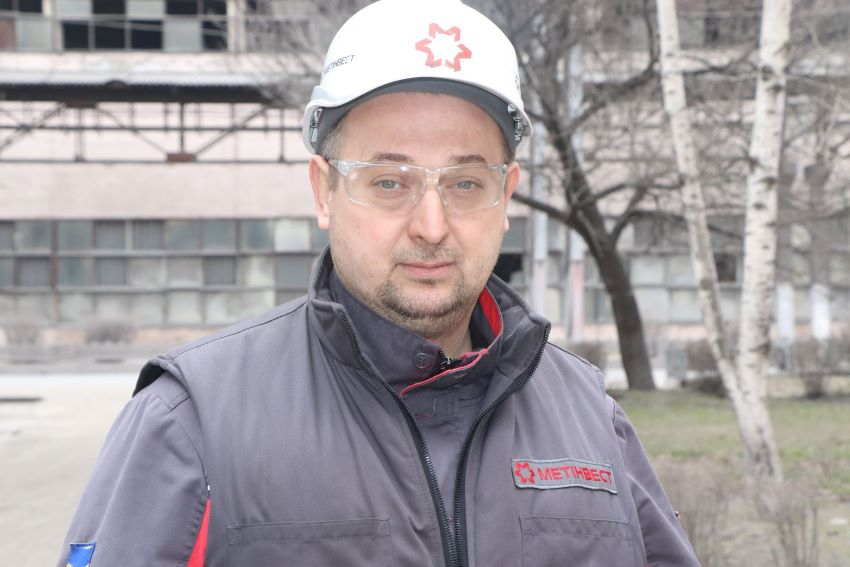
Dmytro LUBINETS, head of Metallurgical Equipment Repair Shop:
"We take an individual approach to the repair of each hot metal ladle car: from defect detection and development of drawings to manufacturing the parts in-house. The first refurbished car has already returned to the blast furnace shop, and we are currently restoring the second. As the results of the pilot repair are entirely satisfactory, we have decided, in collaboration with the blast furnace operators, to systematise this process: damaged ladles will be sent directly to Metallurgical Equipment Repair Shop. This will allow us to quickly return them to operation after repair and, in this way, maintain the stability of the production process. In these difficult times of the war, such cooperation is crucial – it is our way of overcoming staff shortage and maintaining the production rhythm.”
As a reminder, last year, MERS's specialists mastered the technique for repairing slag ladle cars having significant wear and defects. Previously, such ladles were written off for disposal and replaced with expensive new ones. In 2025, 15 slag ladles were repaired and returned to the blast furnace shop for further use.