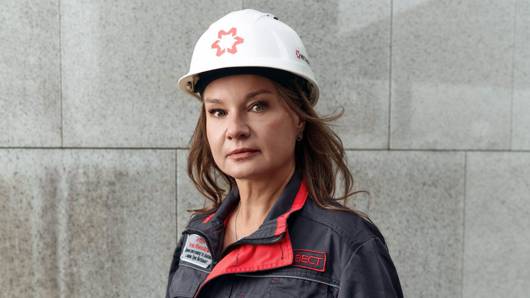

At the Human Capital Forum in Kyiv, Tetiana Petruk, chief sustainability officer (CSO) at Metinvest Group, spoke about business transformation during the war, the Group’s employee care system amid widespread exhaustion and its approaches to overcoming labour shortages.
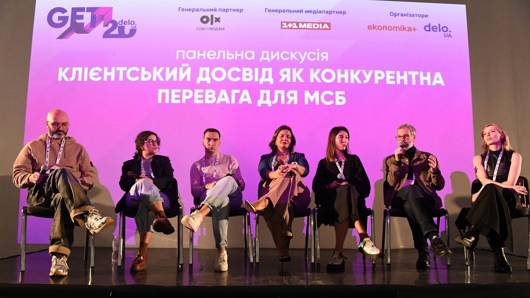
The forum brought together 17 speakers, including representatives of government, business and the cultural sector, as well as consultants and HR professionals. Participants discussed how to manage human capital effectively during wartime, from HR strategies and leadership to organisational transformation, as well as preparing the economy for recovery. The event was organised by Euroindex.
Petruk took part in the Hard Talk session “No Room for Error: Crisis Transformations at Full Speed”. The discussion also featured executives from Ukrposhta and Neqsol Ukraine.
Setting priorities in times of change
According to Petruk, business transformation during the war is no longer a choice but a necessity. “We are living in a state of constant change: the way things were before simply will not return. Today, the ability to adapt quickly and make decisions is paramount if we are to move forward in these new realities,” she said.
Before the full-scale war, Metinvest employed 113,000 people; today, the figure is around 50,000. “We have lost almost half of our business, yet we remain one of Ukraine’s leading industrial companies. And this is entirely thanks to our people,” the Group’s CSO added.
Petruk emphasised that pre-war HR tools no longer work, and that business now requires innovative approaches. “But people-centricity must remain a priority. And this is not only about care and the ability to negotiate: it is also about discipline.”
While production planning in the past depended on resources, raw materials and equipment performance, today it depends on the availability of people. “This is why we must rebuild our processes in a way that places the individual at the centre,” she explained.
Addressing the labour shortage
Metinvest currently has around 4,000 vacancies. Every sixth employee is serving in the armed forces of Ukraine, accounting for 15% of the active workforce. The Group’s enterprises are located close to the front line, in Zaporizhzhia, Kryvyi Rih and Kamianske.
Metinvest is experiencing the greatest shortage in skilled blue-collar roles, yet there are virtually no qualified workers available on the market.
“We hire a loader and train him to become an assistant steelmaker. Today, we must rely primarily on ourselves, and all our programmes are built around this. If previously it took six to nine months to train a steelmaker, today it takes four to five months for them to be able to work independently,” Petruk said.
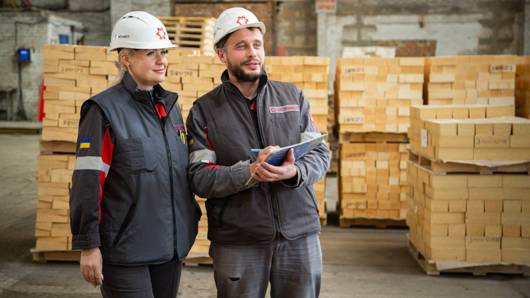
At the same time, in a business that was previously male-dominated, women now make up around 30% of the workforce. They work as crane operators, electrical fitters and drivers of heavy quarry equipment.
Providing tools for restoring strength
“The war has entered its fourth year. People are tired and exhausted. We must provide them with tools and resources that help to sustain productive work: care for mental and physical health, as well as the veteran support programmes we are implementing,” the Group’s CSO noted.
In particular, the mental health support programme, originally introduced during the coronavirus pandemic, has undergone significant transformation: Metinvest has revised its priorities and approaches, and now provides psychological counselling to all employees and their families. A dedicated support stream has also been created specifically for war veterans.
“We have heroes returning from the front line, and heroes who work every day under constant air-raid alerts. That is why ensuring people’s safety is crucial for us: every one of our sites is equipped with a shelter, including those production facilities where work cannot be stopped,” Petruk added.