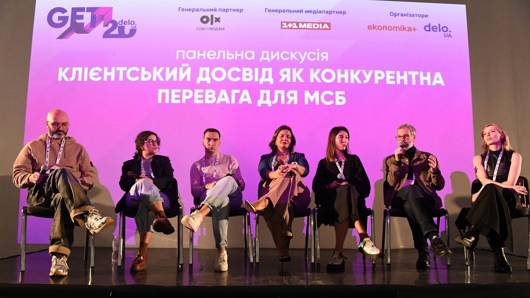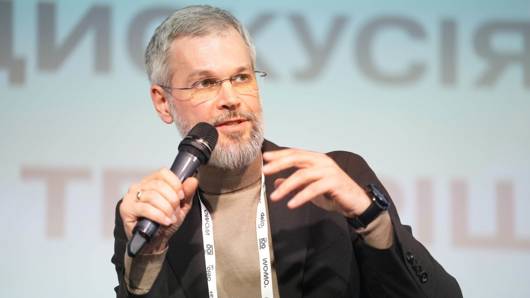

Oleksandr Vodoviz, head of the Chief Executive Officer’s Office at Metinvest Group, spoke at the “Doing Agribusiness in Ukraine” conference in Kyiv about the key challenges facing freight operators, possible solutions and the state’s role in addressing them.
The event brought together more than 25 speakers, including representatives of agriculture, logistics, mining and metals, banking and the relevant government ministries. Participants reviewed the outcomes of 2025, the main challenges facing agribusinesses, and strategies for the sector’s development and European integration.
Vodoviz took part in the panel discussion “Speaking Frankly About Logistics”. The discussion also included representatives of the Ministry of Economy, Environment and Agriculture, the Ministry for Communities and Territorial Development, Ukrzaliznytsia, Kernel and the All-Ukrainian Agrarian Council.
According to Vodoviz, Metinvest is currently focused on survival rather than development. It has been operating at a loss for two years and has suspended operations at Inhulets Iron Ore, which employs around 7,000 people.
On the need for an arbiter
In these circumstances, an increase in freight tariffs could force even more enterprises to shut down.
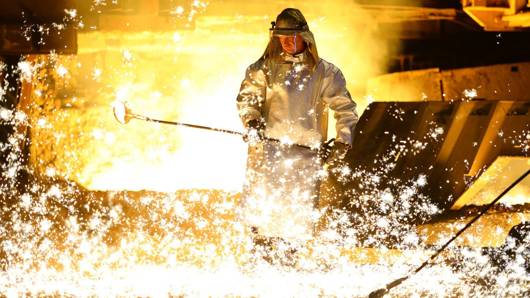
“For example, we can compete in certain markets, such as Egypt: we deliver our products there, earn a margin of US$5-7 and maintain our presence. However, higher tariffs make these supplies unviable and force us to shut down a blast furnace. When a furnace stops, another mining and processing plant also comes to a halt,” Vodoviz explained.
He believes that the state should act as an arbiter between Ukrzaliznytsia and businesses, in both the agricultural and steel sectors: “The state should say that it is more beneficial not to raise tariffs but to subsidise Ukrzaliznytsia, as this would generate higher tax revenues and export earnings and ultimately benefit the whole country. However, there is currently no such arbiter: the state is siding with Ukrzaliznytsia.”

On the financing of Ukrzaliznytsia
At the same time, Vodoviz noted that the state-owned monopoly has shown a high degree of openness in the past ten years and a willingness to engage in dialogue with the private sector.
“All freight transportation is profitable. The problem is the immense pressure that passenger services place on freight tariffs. Over the past year alone, this amounted to a loss of UAH24 billion,” he added.
EU countries address this issue by financing national logistics operators from the state budget.
“While we would also like Ukrzaliznytsia to receive support from the budget and reduce the pressure on tariffs, the parliament has not provided for this in legislation. It has included UAH16 billion in various resolutions. If this funding does not materialise, the railway risks grinding to a halt. Without it, we will not be able to deliver cargo, which is essentially the lifeblood of our economy. That is why the state must take a balanced position, where everyone – both businesses and Ukrzaliznytsia – is slightly dissatisfied, but the country as a whole benefits,” Vodoviz believes.
On loss-making stations
The state operator faces another challenge: there are around 525 freight stations with low activity, some of which handle only one railcar a week.
“We are asking Ukrzaliznytsia to close loss-making stations, as businesses are effectively subsidising them through tariffs. When freight volumes fell from 320 million to 160 million tonnes, companies were forced to cut jobs and shut down operations. The business community perceives the tariff as a tax that increases costs, which is why the state must intervene. The same applies to financial obligations: if businesses can face default, why should Ukrzaliznytsia be any different?” he emphasised.
On freight classes
Vodoviz noted that differences in tariffs for various freight categories are driven by the differing burden they place on infrastructure: the greater the number of stations involved and the smaller the consignments, the higher the cost of transportation.
For example, iron ore, coal and other large industrial cargoes are transported in block trains (around 100 wagons) and pass through only one or two stations. By contrast, grain and other agricultural cargoes are typically shipped in small batches (eight to ten wagons) and pass through around 15 stations. This causes them to generate significantly higher costs, including station staff, electricity, infrastructure and maintenance.
“On average, ten small agricultural consignments carry the same volume as one block train of iron ore, which is why the tariffs differ,” he added.
On a new tariff model
According to Vodoviz, Ukrzaliznytsia’s new tariff-setting model should be based on the principle of fairness: if cargo passes through many stations, requires additional shunting operations, or is transported in small consignments, such routes should cost more, regardless of whether the cargo is iron ore, coal or grain.
“We stand for honesty and fairness. The new tariff model should be built on these very principles, as in Europe. If cargo passes through a station that requires resources and staff, the producer using it should contribute to its maintenance. At present, costs are spread across everyone – both agribusinesses and steel producers – which creates an imbalance,” he explained.
Vodoviz emphasised that fair tariffs can be achieved only by reforming the national carrier: “Ukrzaliznytsia needs reform, including a transparent tariff-setting mechanism that reflects the real cost of transportation.”