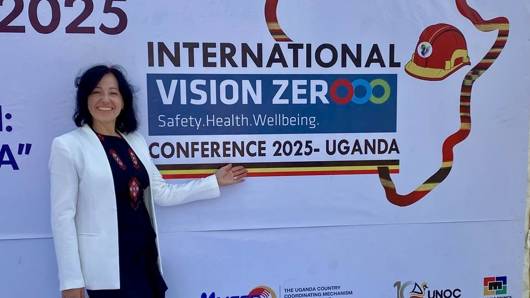

Metinvest Polytechnic continues to strengthen Ukraine's human capital: university lecturer Maryna Derzhevetska has been awarded the KRASP-Elsevier fellowship in Poland and is conducting a project focused on financial literacy among young people for the country’s post-war recovery. Her research integrates financial literacy, digital technologies, and practical skills that help students and young people effectively contribute to Ukraine's economic revival.
Maryna Derzhevetska, Head of the Department for International Cooperation and Projects and Associate Professor at the Department of Digital Technologies and Project-Analytical Solutions, has become a fellow of the KRASP-Elsevier programme, one of Poland's most prestigious initiatives supporting Ukrainian scholars. Her candidacy was chosen through a competitive process, highlighting the international recognition of her professional experience and scholarly achievements.
This year, Maryna Derzhevetska is working at Cracow University of Economics (UEK), where she represents a new research direction dedicated to the financial literacy of Ukrainian youth in the context of post-war development. The direction emerged thanks to professional contacts with Polish colleagues, especially Elżbieta Kubińska, Director of the Institute of Finance. This collaboration helped shape the topic "Financial Education of Children and Youth for Ukraine's Reconstruction", which integrates Maryna's scholarly interests in statistics, human capital, and digital technologies.
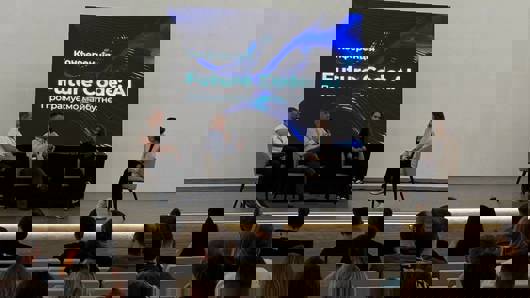
Her research focuses on exploring the level of financial literacy among students, understanding how financial skills influence personal resilience and readiness to engage in the country's reconstruction, and creating the FCRR (Financial Capability & Recovery Readiness) index. This index is designed to measure young people’s financial capability and their readiness to participate in reconstruction efforts. Methodologically, the project is based on a comprehensive approach: "knowledge → attitudes → behaviour → readiness for recovery", complemented by sustainable development, investment readiness, and digital security considerations.
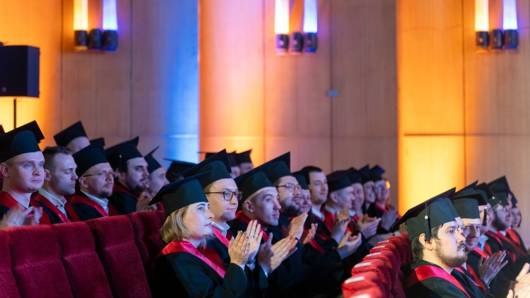
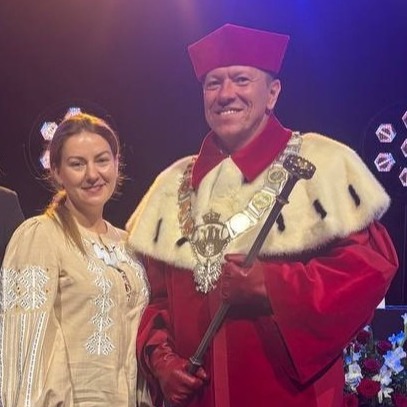
Marina emphasises her Polish experience is exceptionally valuable for her. System-wide practices, strong digital infrastructure, and a high level of institutional trust are resources that can be adapted for Ukraine’s recovery. Participation in the programme has also opened broader professional opportunities for her research: she presented her findings at the Institute of Finance and took part in the inauguration of UEK's 101st academic year.
According to Maryna Derzhevetska, her participation in the programme is not only about scientific work but also about motivation and belief in Ukraine's future. She stresses that the courage to act and to take on challenges shapes the path toward the shared goal of Ukraine's victory and sustainable development. Her story demonstrates that international cooperation can begin with a single encounter or email, and that every new experience opens opportunities to grow and use science as an instrument for the country’s recovery.
For Metinvest Polytechnic, this achievement is an important testament to the university's active international presence. The university consistently develops partnerships with European universities, involves lecturers in international programmes, and supports research that has practical significance for social development, digital transformation, and post-war reconstruction of Ukraine. Maryna Derzhevetska's participation in the KRASP-Elsevier programme is a testament to the potential of Ukrainian scholars and demonstrates the importance of their work in the global academic environment.
For information: The KRASP-Elsevier programme is a joint programme of the Conference of Rectors of Academic Schools in Poland (KRASP) and Elsevier. Its goal is to create opportunities for Ukrainian scholars to continue their research activities, develop international cooperation, and integrate into European academic communities. The fellowship provides opportunities to work the supervision of Polish professors at leading universities, conduct independent research, participate in academic events, and have access to Elsevier’s modern research tools.