
At the “War ’26: Humans vs Machines” conference, organised by Ukrainska Pravda and held on 27 February in Kyiv, Oleksandr Myronenko, chief operating officer of Metinvest, outlined the Group’s latest developments aimed at protecting military personnel, civilians and critical infrastructure, as well as the requirements for scaling up production.
The conference brought together military personnel, analysts, defence industry professionals, business leaders and media representatives. Participants discussed how to combine human potential and technology in wartime conditions, increase weapons production and sustain morale in the fifth year of the war.
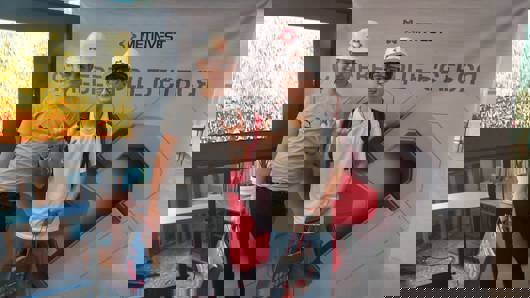
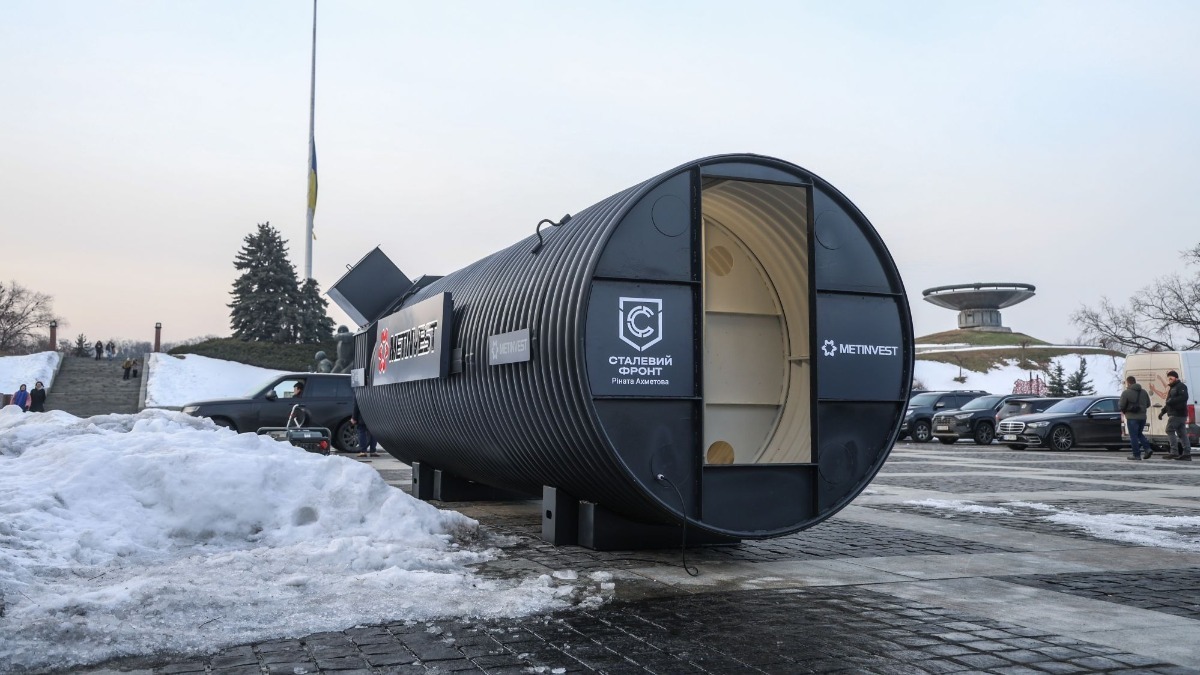
As part of the event, an exhibition of products by Ukrainian manufacturers for the defence forces was held. Alongside drones, robotic systems and armoured vehicles, Metinvest showcased its steel military “hideout”. Visitors were able to step inside and learn how it is designed and equipped.
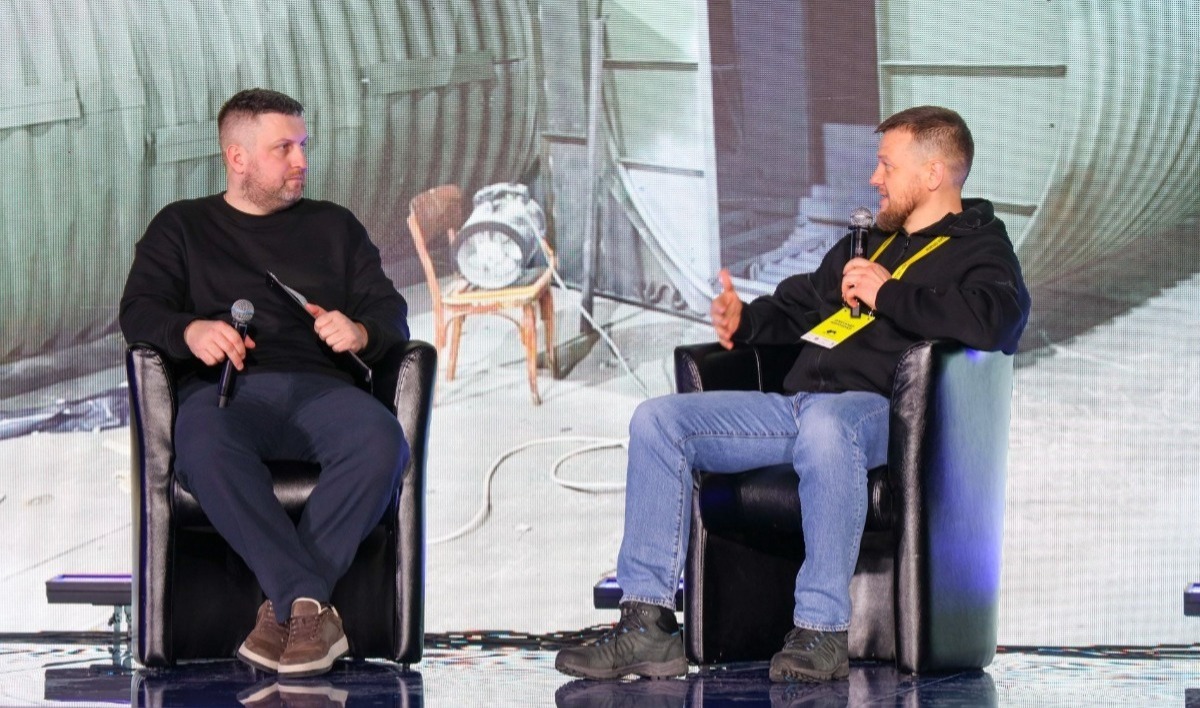
During the panel discussion “Relentless Steel”, Myronenko spoke about the solutions that the Group has developed for both the front line and the home front.
Protection for the front line
Metinvest has been supporting military personnel, civilians and its own employees since 2014, when its facilities in Mariupol and Avdiivka were operating virtually on the front line.
“When the full-scale war began, our shareholder Rinat Akhmetov set the Group the task of doing everything possible to support the resilience of the country and the cities where our facilities are located. We have remained committed to this for the fifth consecutive year,” Myronenko said.
The story of the underground steel shelters began on 24 February 2022, when Metinvest was developing a plan to reinforce Zaporizhzhia.
“Metinvest has extensive experience in supporting military personnel, civilians and our own employees: in protecting them and providing various forms of protection. As such, we considered numerous options for constructing fortifications around the city. One solution that we identified during the planning process was shelters made of corrugated steel. We further refined them in line with the military’s requirements by increasing their diameter and length,” Myronenko recalled.
The first region where the “hideouts” were installed on a large scale was Zaporizhzhia. They were later deployed in Pokrovsk, Myrnohrad and other cities in the Donetsk region, where the Group contributed to building fortifications. They are now being installed along all active frontline areas, from Kharkiv to Kherson.
The basic shelter design was further enhanced in line with the military’s needs and now includes everything required for service personnel staying in them. Based on these “hideouts”, two underground field hospitals have already been constructed in the Zaporizhzhia and Donetsk frontline areas, along with several dozen command posts of various levels.
Shelters for civilians
Metinvest also offers solutions aimed at protecting civilian infrastructure and the population.
“Our latest developments include above-ground ‘hideouts’ used at Ukrainian ports. They feature reinforced walls designed to protect against shrapnel. Such shelters have also been installed at thermal power plants, enabling continuous-operation personnel to take cover during shelling. For an energy-intensive and export-oriented business, it is crucial that both ports and energy facilities remain operational, which is why we help to ensure the safety of staff at these sites. We are also installing these shelters at Metinvest’s own facilities to protect our employees,” Myronenko said.
Among Metinvest’s civilian protection solutions is the Citadel project to build fully equipped shelters designed to protect the population during missile and drone attacks. One such facility has already been built in Borodianka in the Kyiv region, and several more are under construction in Zaporizhzhia. The key advantage of these shelters is the speed of construction: while building a concrete bunker can take three to six months, a steel structure offering the same level of protection can be completed within three to four weeks.
“We are in discussions with local communities to further develop this initiative, which was launched in the second half of 2025. This year, we plan to install at least several dozen shelters, and ideally a few hundred,” Myronenko said.
Scaling up production
To increase the production of metal “hideouts”, the Group requires predictable orders for three to six years. This would enable it to plan volumes effectively and create new jobs.
“At the very least, we need visibility for the next year to 18 months. This would allow us to significantly scale up production, as we would be able to recruit additional staff. We have sufficient steel and available sites outside our core production facilities,” Myronenko noted.
Metinvest is working with the Ministry of Defence and the Ministry for Communities and Territories Development to obtain a schedule and parameters for future orders.
“There is demand, but so far without specific timelines or volumes. I hope that within the next one to two months, we will agree on clear schedules and defined state requirements, which will allow us to scale up production. Another important aim for us is bringing the ‘hideouts’ to international markets. Metinvest is already in contact with interested parties regarding the expansion of production,” Myronenko added.