
With support from Metinvest, a globally recognised therapeutic method continues to be introduced in Zaporizhzhia.
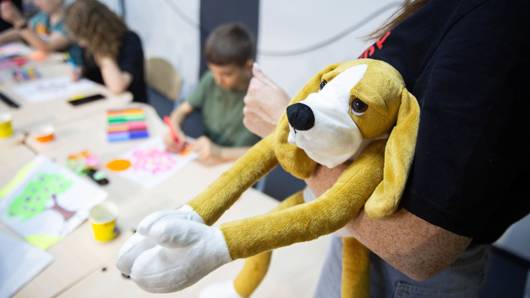
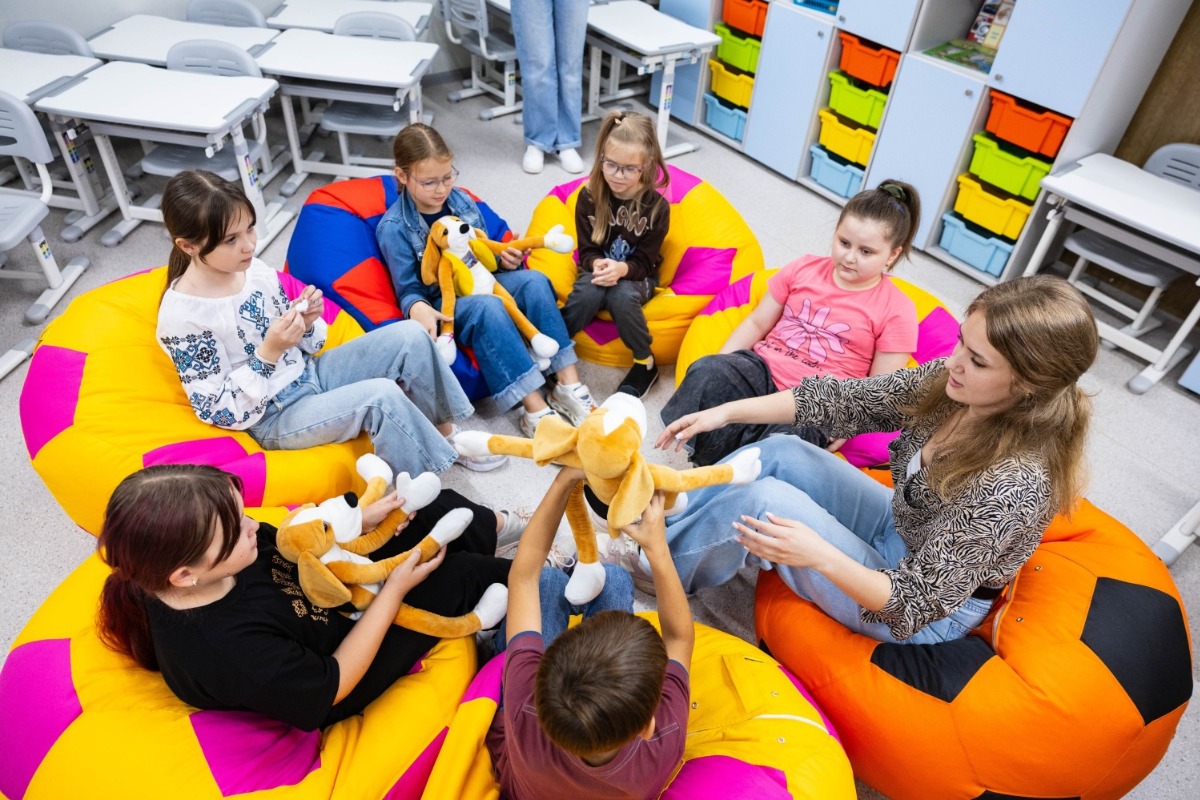
This is what a session with a Hibuki dog looks like at a gymnasium in Zaporizhzhia. The children talk about their mood, choose emotion cards, and then join hands with the psychologist and do a warm-up exercise. At first glance, it seems like a regular children's activity. Yet each exercise serves an important purpose: helping children cope with the experiences brought by the war.
"Hibuki" means "hug" in Hebrew. It is a plush toy dog with long paws designed for hugging. During the sessions, children learn to recognise their own emotions, talk about them, and find ways to cope with anxiety.
"He can hug, and you can also brush him. We are given cards, and each of us shows the emotion shown on the card. He calms me down. I don’t feel alone. I hug him, hold him in my arms," says Artem, a student at Gymnasium No. 4.
For the children, this was the eighth and final session. Over the course of a month, they met with a psychologist and Hibuki the dog, played games, drew pictures, did exercises, and learned to talk about their feelings. Some of the children have experience of living under shelling, while others have experienced forced relocation, separation from loved ones, or the loss of a parent.
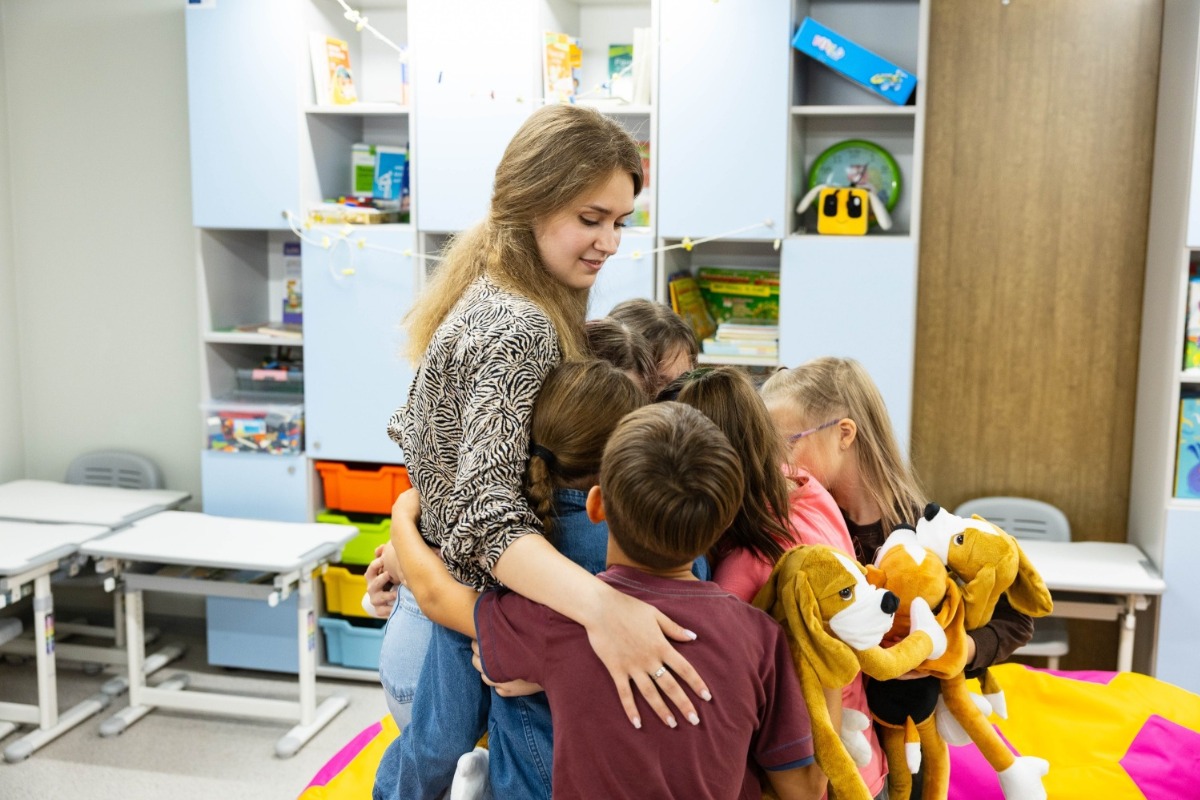
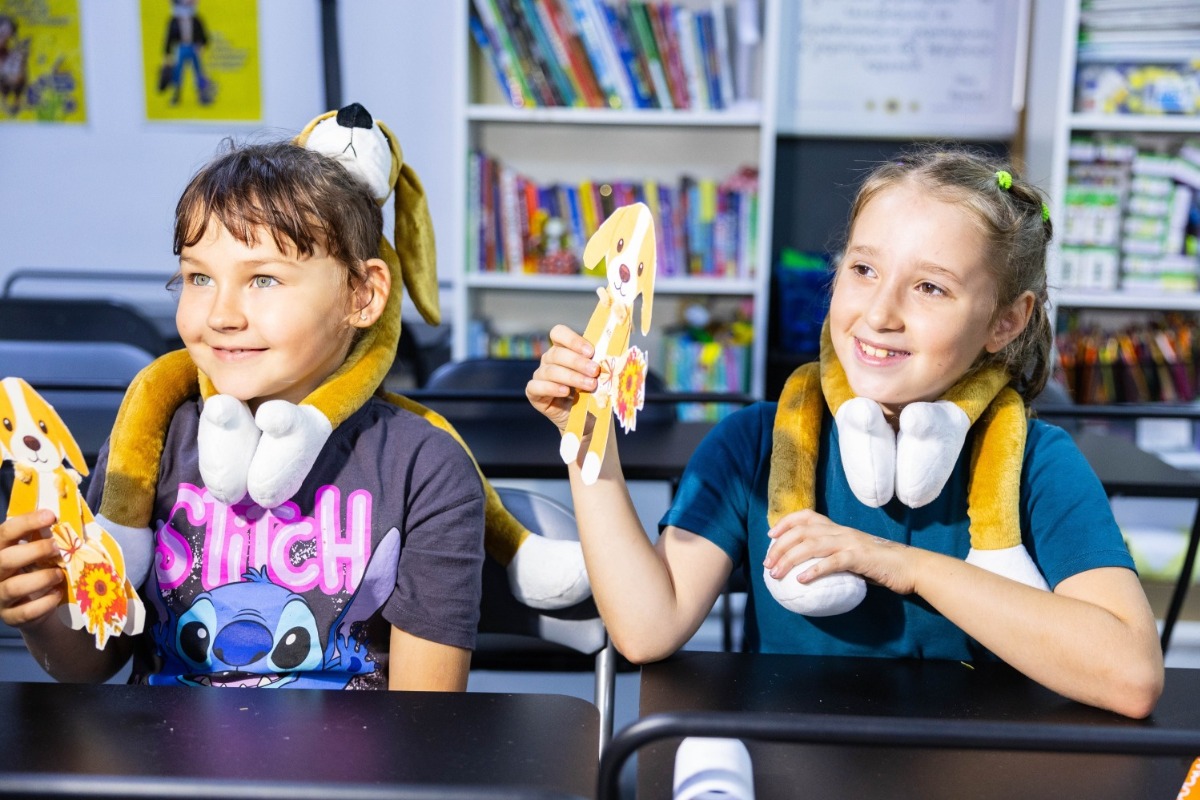
"Some of the children showed signs of stress, anxiety, fear of falling asleep at night, and very strong emotional reactions, for example to loud noises and the sound of explosions. This method and the interaction within the group help children adapt to our realities," says Alyona RADCHENKO, a psychologist at Gymnasium No. 4.
Alyona herself knows about Hibuki therapy not only from books. She completed training in the methodology back in 2024. It was then that a systematic specialist training programme was launched in Zaporizhzhia. The programme is funded by Metinvest in cooperation with the authors of the Israeli project, the NGO "Zaporizhzhia. Platform for Joint Action", and the Department of Education and Science of the Zaporizhzhia City Council. In Zaporizhzhia, Metinvest Group is represented by Zaporizhstal, Zaporizhia Coke, Zaporizhia Refractories, and Metinvest Machinery.
Over the past two years, 75 specialists in Zaporizhzhia have been trained in the methodology, including teachers, psychologists, educators, and representatives of non-governmental organisations. After completing the training, they receive a certificate and a Hibuki therapeutic toy, which they can use in sessions with children.
During this time, more than 225 children from military and veteran families, internally displaced families, and other vulnerable groups attended sessions based on the methodology.
Hibuki by children's side
Yana Boiko works as a teaching assistant at Gymnasium No. 94 in Zaporizhzhia. After a month of Hibuki therapy sessions, she noticed positive changes in her students.
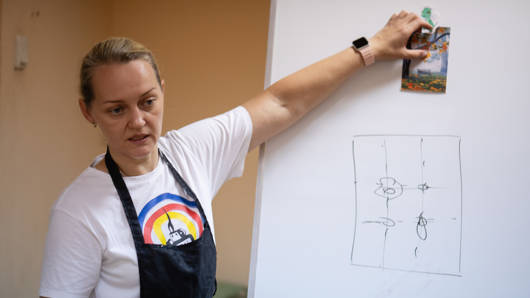
"Some children have opened up more, while others have grown more confident. We did many interesting activities: origami, paper craft, and emotional release exercises. We imagined ourselves as trees, relaxed to music, sculpted our own Hibuki, sculpted our fears, and then talked about how to cope with those fears," says Yana BOIKO.
For children living in the frontline city, such sessions are particularly important.
"It is hard for children to cope with strikes and with the absence of their parents. They miss them. Hugging this dog helps them feel a little better," the teacher says.
Victoria Yakovlieva, principal of Gymnasium No. 94, says that many of the gymnasium's students have been through experiences that are difficult even for adults to cope with.
"We have a large number of internally displaced children and many children whose parents are defending Ukraine. There are also children whose parents have been killed or are being held in captivity. There are families whose apartments were hit two or three times and eventually lost their homes. The children witnessed it all and lived through those experiences," the principal says.
According to her, Hibuki therapy is particularly important for primary school children, as the toy helps create a sense of safety and trust.
"This dog gives children so much warmth and kindness, and they see it as their friend," says Viktoriia YAKOVLIEVA.
One of the children attending the sessions is young Kseniia. Her family moved to Zaporizhzhia in 2022. The girl admits that there are times when she feels scared, especially during attacks at night.
"I like the sessions. Now I know that when the Shaheds are flying, I can hug the dog and calm myself down. Just recently, the Shaheds and missiles were flying at night, and my mum and I were sheltering in the hallway," says Kseniia.
It is in moments like these that Hibuki can become a child's friend, someone they can hug when they are scared and share their worries with.
From Zaporizhzhia to three cities
In 2026, the Hibuki Therapy project expanded beyond Zaporizhzhia. Kryvyi Rih and Kamianske joined the programme. Overall, 120 teachers, educators, and psychologists across the three cities have been trained in Hibuki therapy this year.
The programme is funded by Metinvest in cooperation with the authors of the Israeli psychological support project for children and adolescents, "Hibuki Therapy", local authorities, and the non‑governmental organisations: in Zaporizhzhia, the NGO "Zaporizhzhia. Platform for Joint Action" and the Department of Education and Science of the Zaporizhzhia City Council; in Kryvyi Rih, the NGO "Kryvyi Rih Foundation for the Future" and the Department of Education and Science of the Executive Committee of the Kryvyi Rih City Council; and in Kamianske, the Department of Education of the Kamianske City Council.
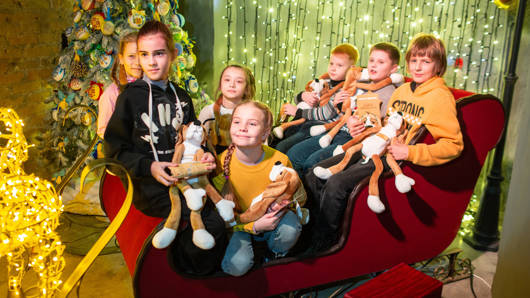
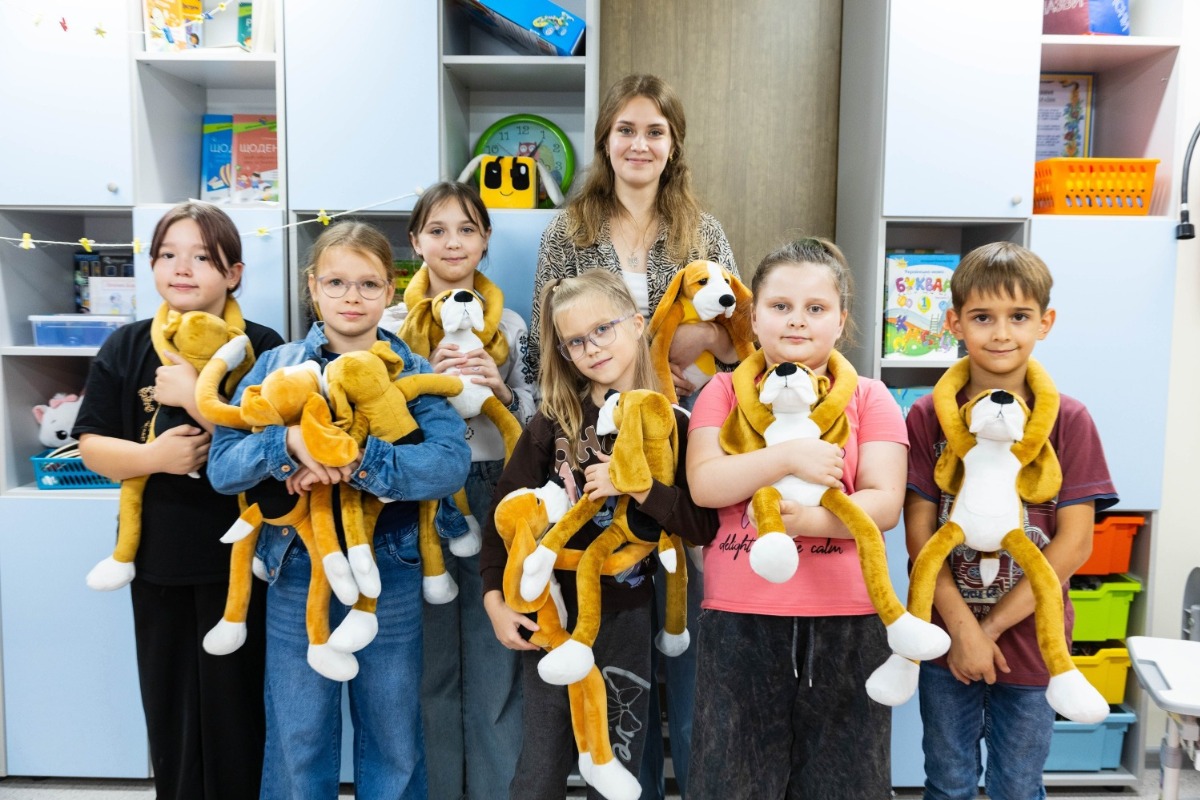
An important continuation of the specialists' training was the distribution of therapeutic toys to children. The Dutch charitable organisation Care for Kids Now provided 300 Hibuki dogs free of charge to children from vulnerable groups in Zaporizhzhia and Kryvyi Rih.
Now this little four-legged friend will be with children not only during school sessions. They will be able to hug it at home when they feel anxious or scared after another attack, or simply whenever they need support.