
Despite the war, Metinvest’s Consolidated Iron Ore continues to implement initiatives aimed at reducing the environmental impact of its operations. One of the leading initiatives among these is the application of green technologies to combat dust emissions from the dry sections of tailings storage facilities.
A substantial proportion of the work undertaken by the environmental specialists at Consolidated Iron Ore is devoted to combating dust formation on the dry sections of tailings storage facilities. For many years, the enterprises have actively employed a method of stabilising the surfaces of the tailings areas through the sowing of grasses.
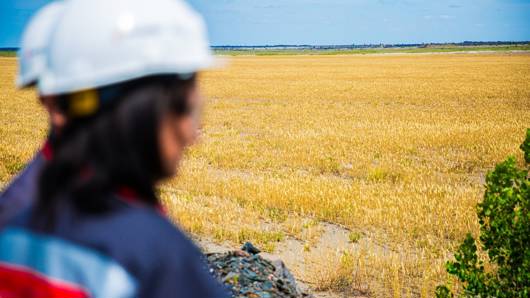
Each year, specialists maintain and expand the areas sown with rye. Although the fields at the plant are artificial, composed of beneficiation tailings, the rye growing on them is entirely real. It sprouts, stabilising the sands and preventing them from producing dust in windy conditions thanks to its strong roots and above-ground shoots. In this way, a living natural barrier is created that prevents dust formation.
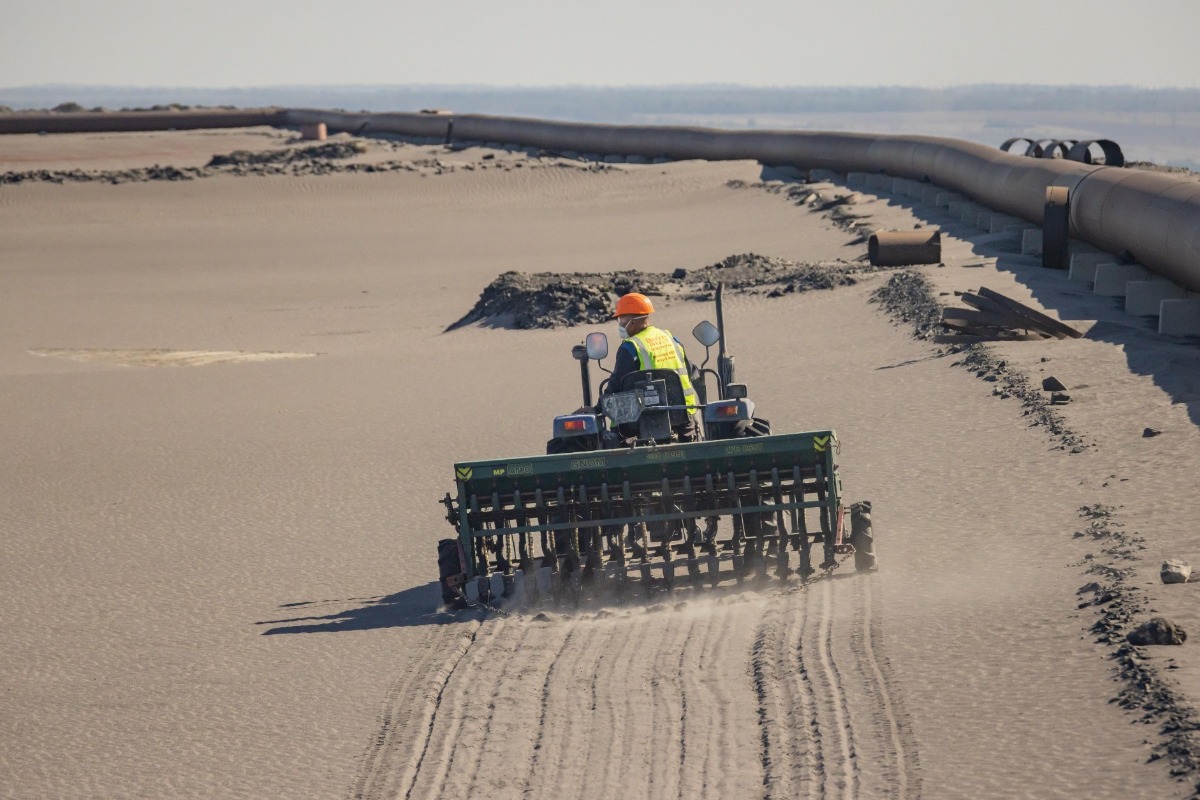
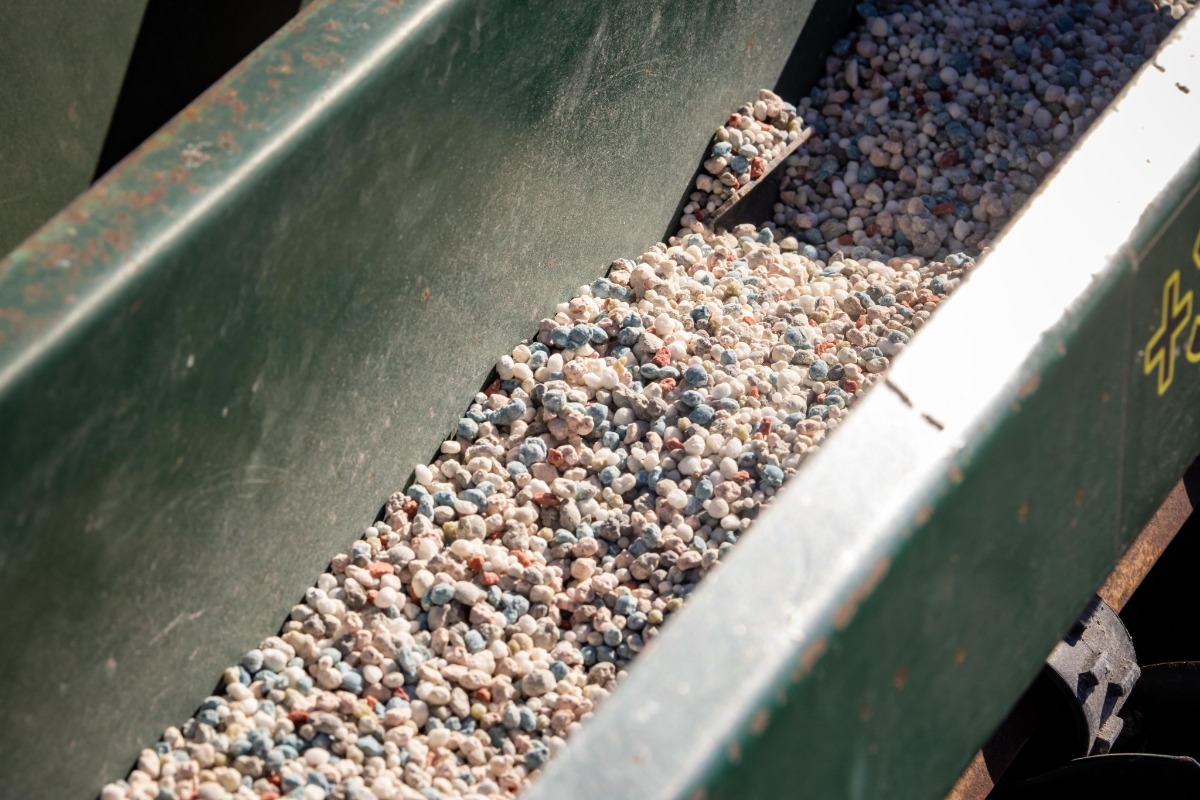
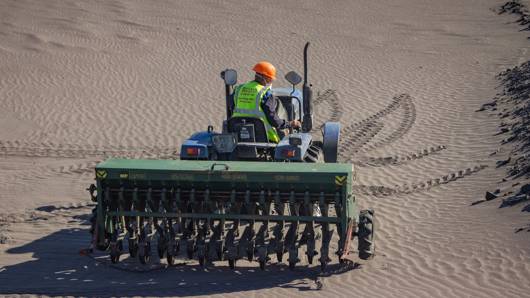
Now, in spring, specialists are applying mineral fertilisers to the tailings areas sown last autumn at the Central and Northern Iron Ores, in order to help the crops recover after the previous frosty winter. Environmental specialists are also overseeding cereals in areas that did not survive the low temperatures, which dropped to minus 18 °C.
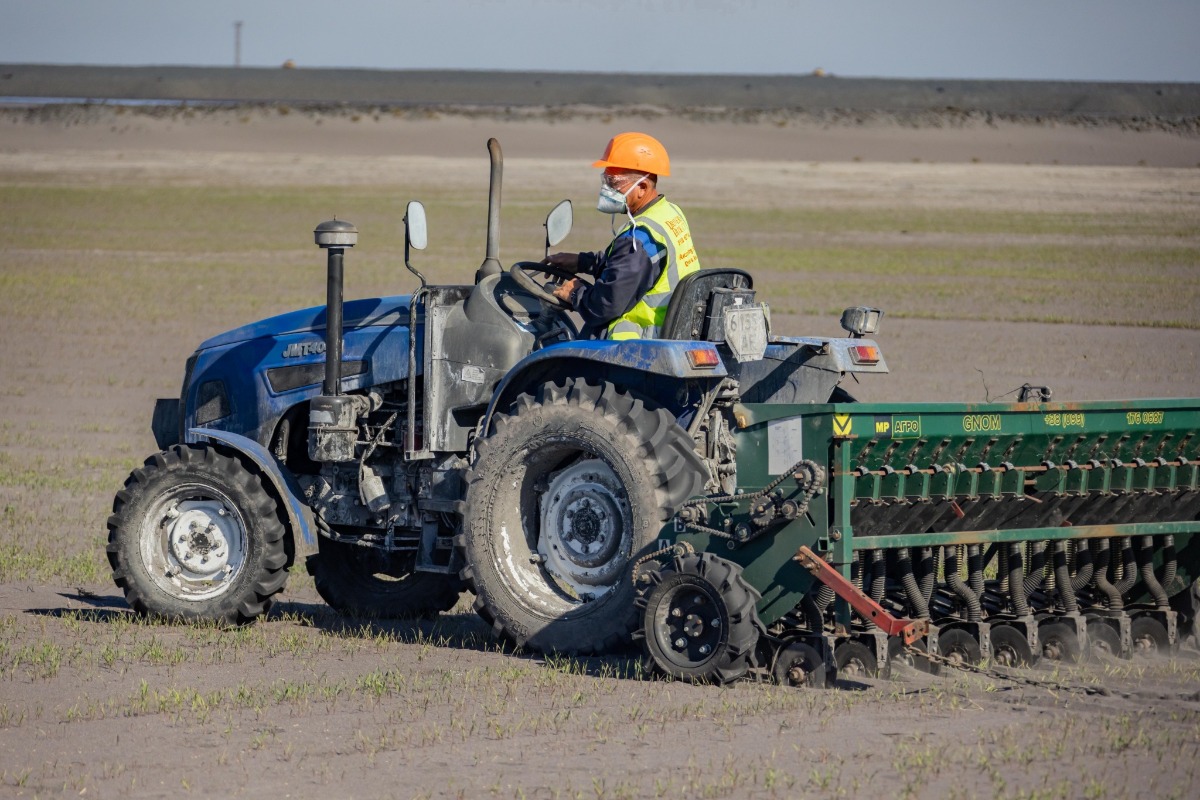
It is worth reminding that last autumn, as part of the implementation of approved environmental measures aimed at preventing dust formation, nearly 200 hectares of rye were sown on the dry tailings areas of the Central and Northern Iron Ores.