
Prior to the full-scale war, Ukraine held a significant position among global steel producers: European trains ran on Ukrainian-made wheels, while rolled steel from Mariupol and Zaporizhzhia was purchased by construction companies ranging from Egypt to Brazil. The war has reduced output threefold; however, even under these conditions, industry remains the largest taxpayer, the principal source of export revenues, and the country’s most significant investor.
As part of HROMADSKE special project on the role of Ukrainian heavy industry, we examine why preserving industrial capacity is a matter not only of economic importance but also of national security.
The Principal Source of Foreign Currency
When it comes to Ukrainian exports, grain typically attracts the most attention. However, in 2025 the share of agricultural products in merchandise exports declined, while supplies from the metallurgical, engineering and light industry sectors increased. Metallurgy, mineral products, machinery and equipment together constitute a substantial industrial export base, and it is precisely the stability of this base that determines the exchange rate of the hryvnia, the adequacy of budget revenues, and the country’s capacity to finance its defence.
This means that a substantial share of the foreign currency inflows Ukraine receives from abroad through the sale of goods is generated by heavy industry. Steel products, pipes, railway wheels and semi-finished goods – all of these are products that Ukraine exports to dozens of markets worldwide.
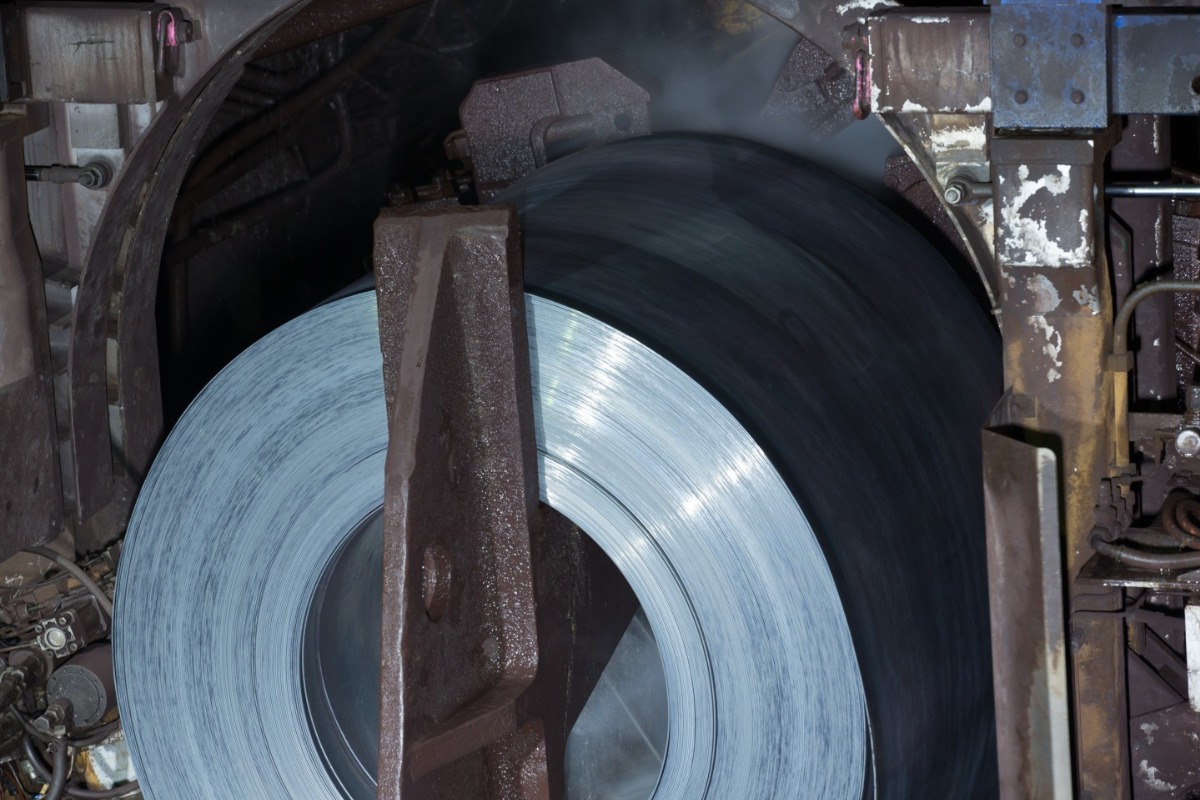
According to steel market analyst Volodymyr Holovko, prior to the war approximately 80% of Ukraine’s steel output was destined for export markets. Mariupol steelworks – Azovstal and Illich Iron and Steel Works – were undergoing active modernisation and increasing the output of higher value-added products. Their loss proved to be the most painful blow.
“As a result, certain types of products important for the domestic market were lost,” says Volodymyr HOLOVKO. "For example, railway rails previously produced by Azovstal. Representatives of Ukrzaliznytsia had to travel to China to find a reliable supplier there.”
A New Geography: How Ukraine Has Reconfigured Its Sales Markets
The full-scale invasion has completely reshaped export logistics. Russia blocked the Black Sea ports – the principal artery for the shipment of steel products. There was an urgent need to switch to overland routes and to seek out closer markets. The focus shifted towards the countries of the European Union. For example, Metinvest – the country’s largest металлurgical group – has, in recent years, fundamentally revised its sales geography.
Due to the high cost of logistics, we were compelled to strengthen our presence in Europe, particularly in the markets of Eastern Europe. This has enabled us not only to partially offset the losses, but also to expand our client base: today, it is 30% larger in Europe than it was in 2021.
— Volodymyr ZHUKOV, Director of Marketing Department at MetinvestBy the end of 2025, Europe had become the principal market for Metinvest’s flat products, accounting for 71% of total shipments of this product category. Shipments of semi-finished products to Europe increased 2.2-fold. The company is developing logistics hubs in Europe and providing technical support through local teams, striving not merely to act as a supplier of raw materials but to become a fully-fledged partner for European clients.
Another major player in the heavy industry market – Interpipe – is also seeking to address these challenges. The company, which manufactures steel pipes and railway products in the frontline Dnipropetrovsk region, supplies its products to all European countries. According to the results of the past year, Europe, accounting for a 47% share of railway product sales, has effectively become the company’s home market. Exports account for 80–85% of Interpipe’s total output, and for certain product groups, the figure exceeds 90%. The company supplies pipes for wind power plants in the North Sea, as well as tubing for oil extraction in the Middle East.
However, the new geography brings not only opportunities but also new challenges.
A Wartime Discount: The Cost of Risk
Wartime risks are reshaping not only logistics but also the very nature of negotiations with buyers. At the same time, the war is not driving up the price of Ukrainian products; on the contrary, it is pushing it down.
“Buyers expect a discount compared with suppliers from safer regions,” explains Volodymyr Zhukov. "In the client’s view, such a discount should compensate for the risk of potential supply disruption. Our task is to minimise this discount.”
This is supported by the reputation Ukrainian producers have built over years of operating across diverse markets.
We have demonstrated that we are a reliable supplier and continue to meet our obligations even under exceptionally challenging conditions. Despite the hostilities, power supply disruptions, and logistical constraints, we have consistently found ways to fulfil our contracts and supply our clients.
— Volodymyr ZHUKOVAt the same time, Zhukov does not observe any systemic trend of avoiding Ukrainian steel due to reputational risks. The primary reason for the loss of some clients after 2022 was, above all, the loss of production capacity at Mariupol plants — and, with it, part of the product range. To compensate for this, Metinvest has launched production of 31 new product types, built a welded pipe mill, and continues to introduce products that are currently imported.
CBAM: A New Challenge for the Industry
As of 1 January 2026, the EU’s Carbon Border Adjustment Mechanism (CBAM) has entered into full force. This constitutes an additional levy on imports of carbon-intensive products, including steel, pig iron, cement, and fertilisers. Formally, it is intended to level the playing field. For Ukraine, which is at war and unable to modernise its production simultaneously, this effectively amounts to the closure of its principal export market.
“The impact of CBAM is very significant,” states Volodymyr Zhukov. "European clients are approaching this issue with considerable caution and are factoring in the risks of additional costs. Some clients are shifting towards local suppliers. To retain such partners, we are often compelled to assume these risks ourselves, which has a material impact on profitability."
For certain low-margin products, supplies to Europe have lost their economic viability altogether, and Metinvest has been compelled to suspend their sales in this market.
The situation for ArcelorMittal Kryvyi Rih is even more severe. The company has completely halted exports to EU countries, shut down its blooming mill – which had been in operation since 1958 – and reduced its workforce by more than 3,400 employees. The loss in the first quarter of 2026 increased to UAH 4.6 billion. According to estimates by GMK Center, potential losses for Ukrainian exporters from CBAM in 2026–2030 could amount to USD 4.7 billion. Budgets at various levels will fall short by nearly USD 1.3 billion.
“CBAM is a long-term European policy and is unlikely to be halted,” says analyst Volodymyr Holovko. “However, Ukraine needs to raise the issue of taking into account its specific circumstances – at the very least, force majeure in the form of the war – as well as its European integration prospects.”
Negotiations between Kyiv and Brussels on this matter remain ongoing. Recently, Members of the European Parliament called on the European Commission to consider a special CBAM regime for Ukraine, recognising the war as force majeure.
“I cannot envisage what situation would qualify as force majeure if Ukraine’s wartime circumstances do not,” said Member of the European Parliament Mohammed SHAHIM during a meeting of the Committee on the Environment, Climate Change and Food Safety (ENVI).
Shortly beforehand, Ukraine’s Deputy Prime Minister for European and Euro-Atlantic Integration, Taras Kachka, stated that the European Commission had made an error in its assessment of the impact of CBAM on the Ukrainian economy, and that the results for the first quarter of 2026 confirmed this.
Chinese Pressure: A Fight for Every Tonne
Another systemic challenge for Ukrainian industrial exports is China. The country with the world’s largest metallurgical industry has increased its steel exports, leading to a decline in global prices and the displacement of Ukrainian producers from markets in North Africa, Turkey, and the Middle East.
China has faced widespread criticism over what is commonly referred to as the issue of excess production capacity. While the Chinese authorities officially deny this, it is recognised within the country, and steps are being taken in response. Over the next five years, the structure of the domestic steel industry is expected to be optimised, with a view to shifting towards higher value‑added output.
— Volodymyr HOLOVKOThere is also a positive signal: according to Holovko, since the beginning of 2026 a decline in Chinese metallurgical exports has been observed, primarily in lower‑priced products.
“Some experts have already begun to express concerns about the emergence of a potential shortage and are forecasting an increase in prices for metal products,” said Holovko.
At present, competition from China remains an ongoing reality, compelling Ukrainian producers to continuously seek out new niches and enhance product quality.
Two thirds of the economy
Exports are only one of the functions of industry. Within the country, it plays a role that is difficult to overestimate.
According to the State Statistics Service of Ukraine, in 2021 the manufacturing industry generated 10.3% of gross value added, the mining industry 6.7%, and, together with the energy sector, industry overall was one of the largest components of GDP. However, the direct share is only the tip of the iceberg. Industrial enterprises procure raw materials, equipment and services from other sectors, while their employees spend their wages on food, education and healthcare, thereby generating demand far beyond plant shops.
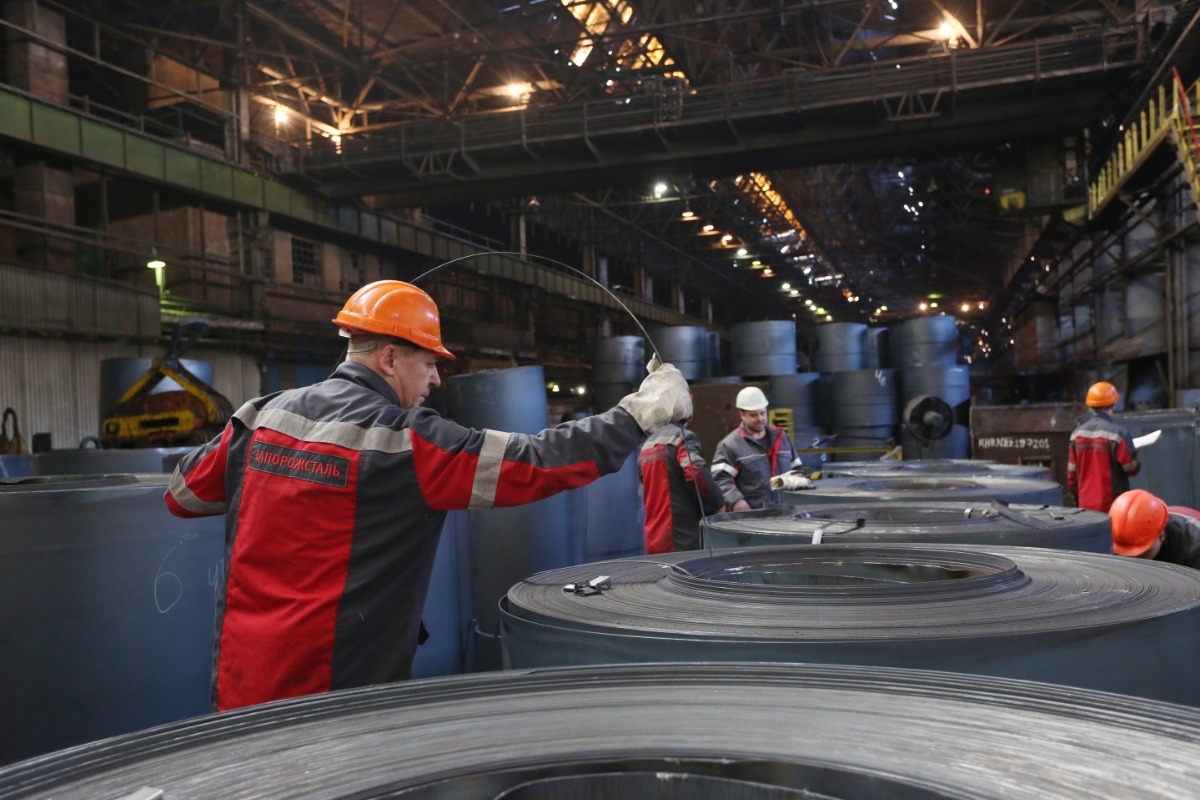
Even under wartime conditions, this role has not diminished. According to data from the State Tax Service, in 2025 the manufacturing sector accounted for 17.9% of budget tax revenues, the largest share among all sectors. This makes industry the largest taxpayer in the country. It also remains the most significant investor: last year, the largest volume of capital investment in the economy – UAH 259.1 billion, or 38.7% of the total – was directed to industry. The primary source of financing remains companies’ own funds, accounting for 71.2% of the total. Thus, industry does not merely produce. It invests both in itself and in related sectors, thereby generating demand for small and medium-sized enterprises, which largely operate to service the needs of major industrial players.
There is also another aspect that is rarely taken into account – the quality of employment. According to the State Statistics Service, in the first quarter of 2026 the average salary in the metallurgical sector amounted to UAH 32,927 – 21% higher than in agriculture. At the same time, industrial workers are formally employed, pay taxes in full, and contribute to the Pension Fund – unlike sectors with a high share of informal employment.