
The profession of an occupational health and safety specialist is now among the most in demand in industry, as modern production requires professionals who are capable of managing risks and working with digital safety systems. It is precisely such specialists that Metinvest Polytechnic trains: during their practical placement at Kamet Steel, students worked at specialised training grounds, studied fire and gas safety systems, explored the risk‑based approach, and learned to use modern tools for monitoring industrial processes.
Over the course of five days, students of the educational programme “Occupational and Industrial Safety” underwent intensive practical training at the Kamet Steel facilities. The programme of the offline session covered the full range of modern approaches to industrial safety: from familiarisation with the technological processes of a metallurgical enterprise to working with digital tools for risk analysis and undertaking practical training exercises at industrial training sites.
Students undertook training in the risk‑based approach and the LOTO (lock‑out/tag‑out) system, worked at the BMP training ground, became familiar with the specifics of hazardous gas operations, learned the fundamentals of risk assessment, practised working in confined spaces, studied the company’s fire safety systems, and mastered the use of Dynamics and Power BI for monitoring safety measures and analysing production data in real time.
Head of Occupational Health and Safety at Kamet Steel, Oleksandr ZABOLOTNYI, emphasises that modern occupational safety is a comprehensive system that integrates technology, analytics, and management decision‑making.
“Modern occupational health and safety is not merely a set of rules, but a multifaceted ecosystem of managerial and technological solutions. For this reason, offline sessions at Kamet Steel for Metinvest Polytechnic students have already become a tradition and are structured on the principle of maximum comprehensiveness. We have therefore integrated critically important vectors into the programme: from an in‑depth understanding of metallurgical processes to the implementation of a risk‑based approach, which forms the foundation of occupational safety."
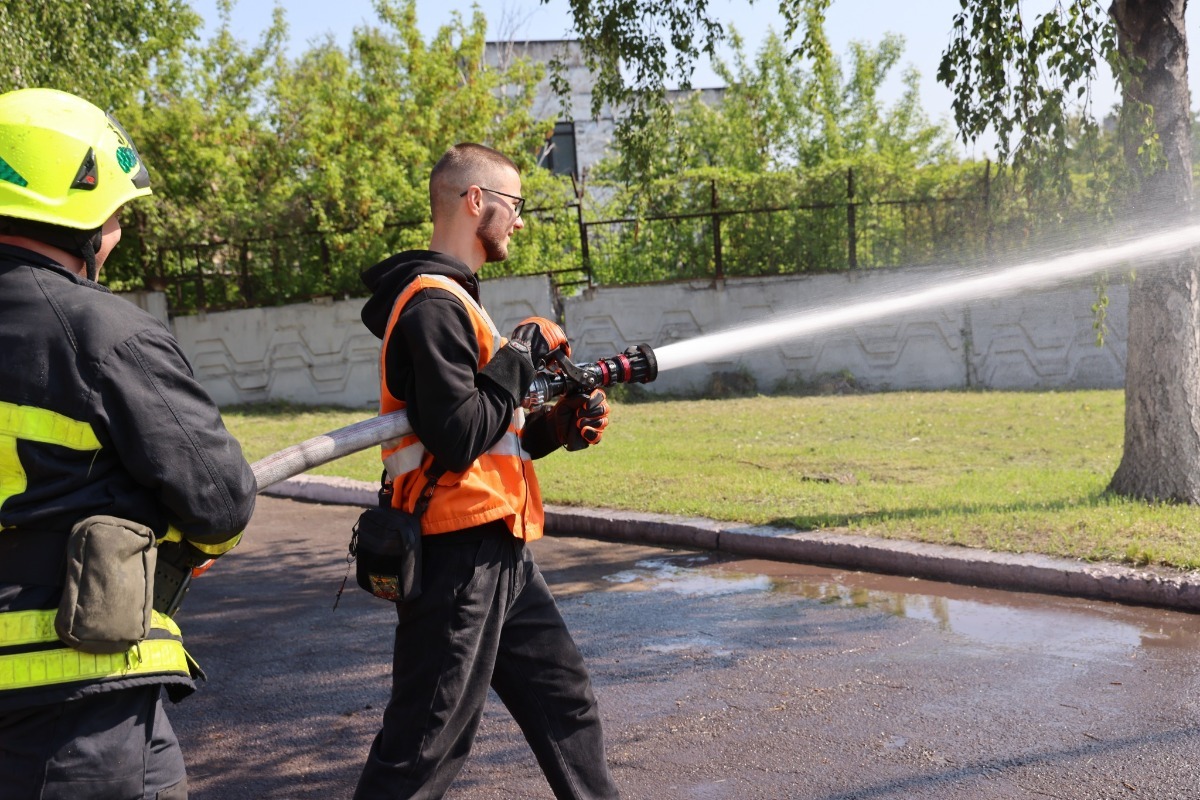
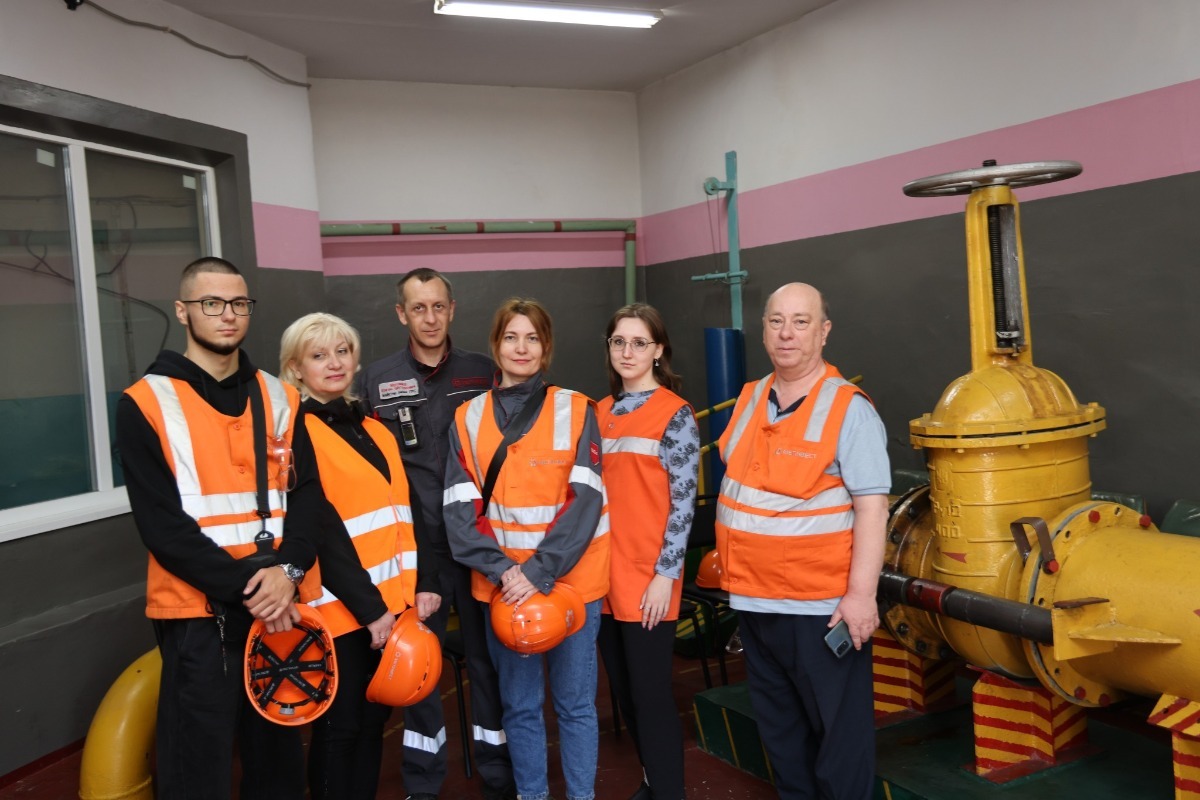
According to him, the practical component of the training enables students to work with real industrial scenarios.
"At the practical training grounds, future bachelor’s and master’s students acquire the essential skills: the BMP system for the safe control of energy, the specifics of hazardous gas operations, and – introduced for the first time this year – a systematic approach to fire safety. We place particular emphasis on the digitalisation of safety through work in the Dynamics system, where students learn to analyse data in real time. I am convinced that such a synthesis of practical experience and innovative risk‑assessment methodologies will prove decisive for them not only in their professional careers, but will also foster a conscious attitude towards safety as a fundamental value in everyday life."
At Metinvest Polytechnic Technical University, it is emphasised that the training of a modern occupational health and safety specialist is impossible without close cooperation with real industrial production.
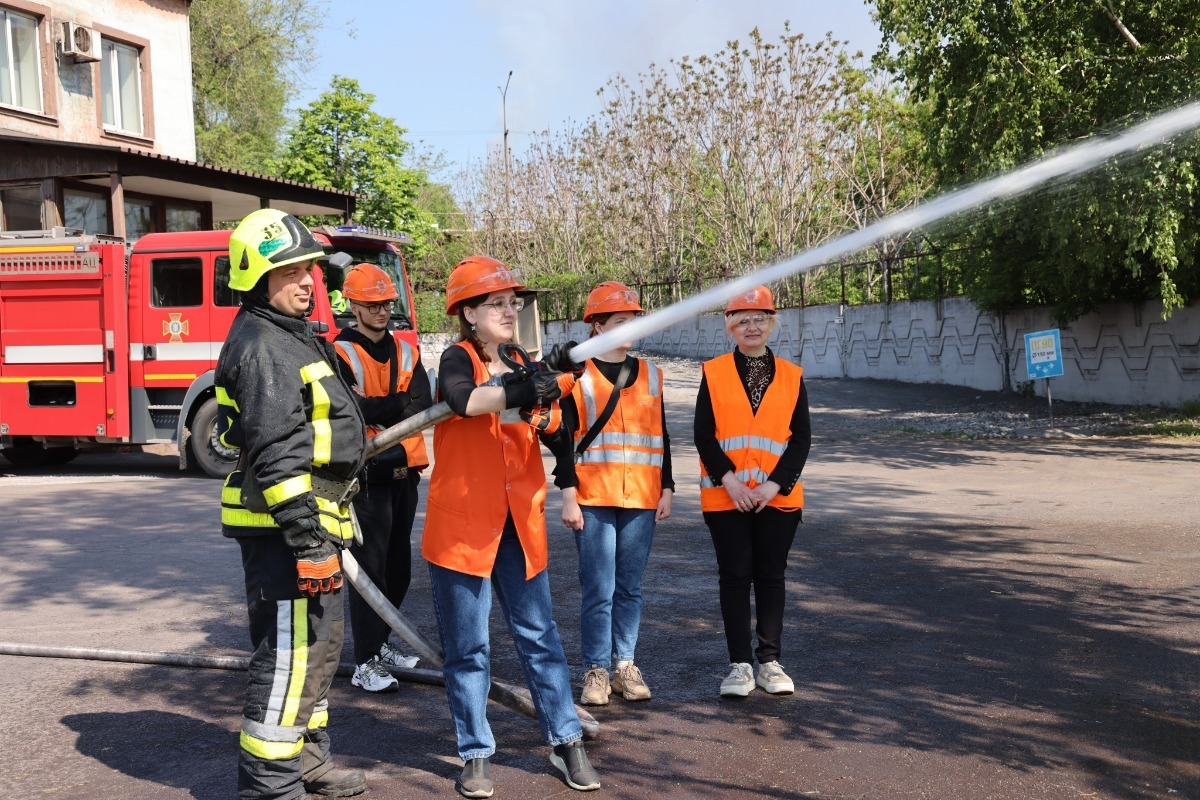
“Fundamental knowledge of occupational health and safety truly comes into its own when it is reinforced by hands‑on experience in a real industrial environment. For this reason, our cooperation with Kamet Steel is not limited to isolated initiatives, but constitutes a well‑established system for training specialists of a new generation,” notes Associate Professor of the Department of Occupational Safety and Environmental Protection at Metinvest Polytechnic, Volodymyr MAISTRENKO.
He adds that the practical training programme is continuously updated in line with the sector’s current challenges.
“This offline session has once again confirmed the effectiveness of such a synergistic approach: We have not merely integrated theory into the industrial context; we have also provided students with the opportunity to practise and refine their skills at the enterprise’s specialised training facilities. The programme, developed in collaboration with practitioners from Kamet Steel, is continually adapted to address the sector’s immediate needs and contemporary challenges. Such an intensive format enables students to move beyond textbooks and gain invaluable hands-on experience, which will become their principal advantage in their professional careers."
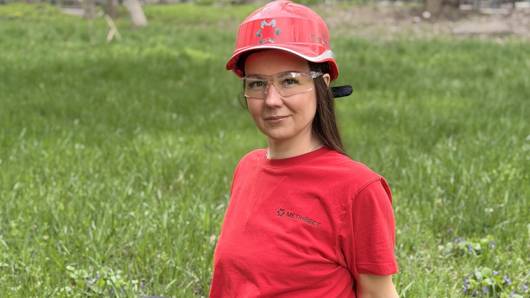
For students, their practical training at Kamet Steel became an opportunity to view the profession far more broadly than the traditional understanding of occupational safety. Natalia MALIIENKO, an engineer in the Operations Department of Motor Transport Department of Kamet Steel and a student at Metinvest Polytechnic, states that the training helps to integrate previously acquired experience with contemporary approaches to safety.
“Occupational safety is a field I chose with my heart, as it combines a high level of responsibility with genuine professional drive. Having already gained some experience in this field, I sought a programme that would not merely confer a diploma, but would genuinely deepen my competencies. At Metinvest Polytechnic, I found precisely such an approach: the programme reveals aspects of the profession that I had not previously encountered, even in practice.
According to her, the offline session at the enterprise made it possible to take a comprehensive view of the safety system.
“This offline session at my home enterprise became a platform for consolidating newly acquired knowledge. Work at the training facilities of the gas rescue service and fire brigade enables a comprehensive perspective on safety, viewed through the prism of real-world challenges. I am grateful for the opportunity to study on such a substantive and multifaceted programme, where theory and practice form a seamless whole.”