An operator of giant mining machines by trade, he twice joined the ranks of Ukraine's defenders. Having served in the anti-terrorist operation and suffered a severe wound in the Kursk region during the Russian-Ukrainian war, Oleksandr Darchyk returned to his home plant, Metinvest's Northern Iron Ore.
"An open pit is like a sandbox from childhood, only bigger"
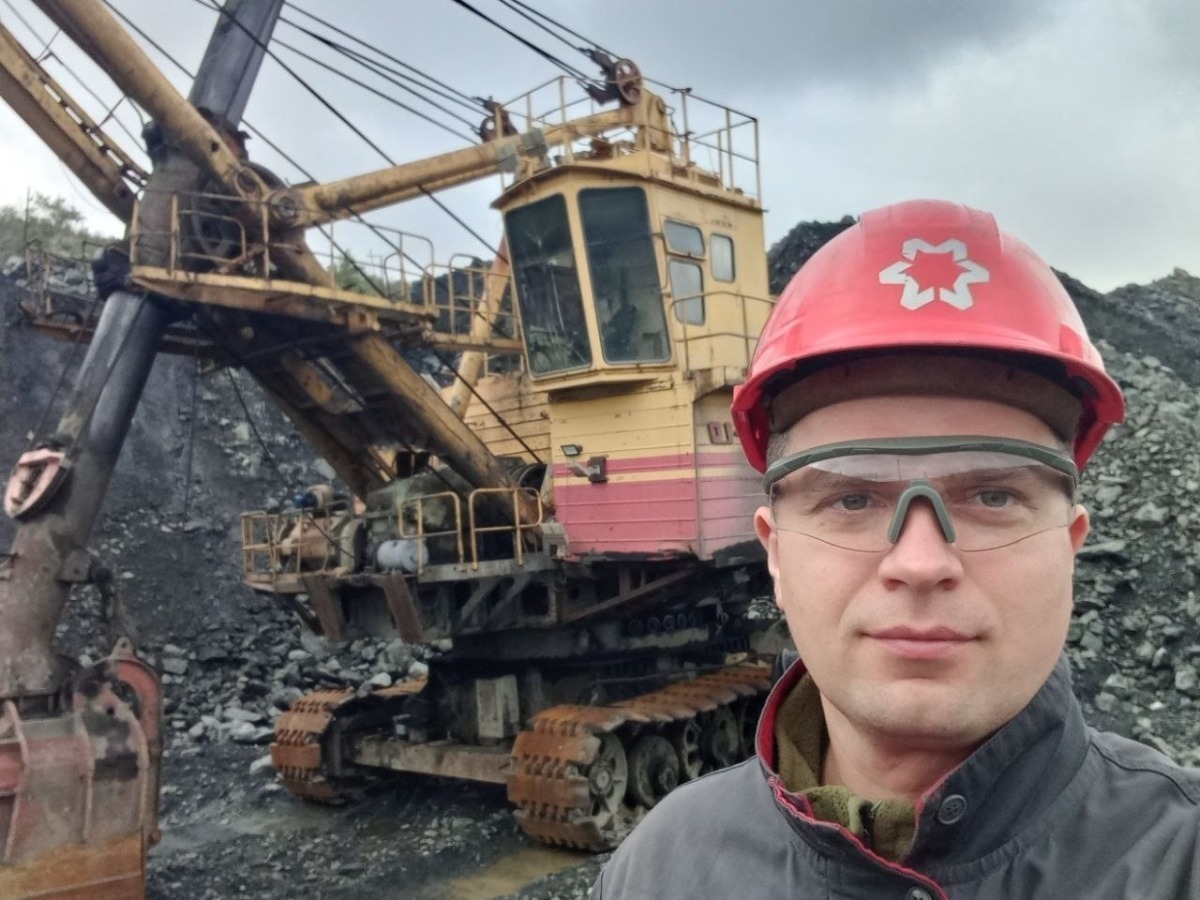
Oleksandr joined Northern Iron Ore at the age of 25. It was 2014. He started as an assistant excavator operator and later underwent training to become a qualified excavator operator. The profession runs in his family: Oleksandr's father also worked as a crawler-mounted mining shovel operator at another mining and processing plant.
"I have liked this profession since childhood. There is scale to it. An open pit is like a sandbox from childhood, only bigger," Oleksandr says. "I have always liked machinery, especially big machinery with great capabilities and gigantic dimensions."
Oleksandr's first shift was a night shift. It was September, and darkness was falling early. He still remembers it with a smile.
"I remember being assigned to an excavator operator named Yurii and being told, 'Follow this guy.' After the bathhouse, we climbed into the company's "liner" and headed off somewhere. It was pitch-dark all around. Where were the excavators? Where were the mining faces? I couldn't make heads or tails of it. A true rookie's hell."
He started out on five-cubic-metre excavators before moving on to larger ten- and twelve-cubic-metre machines.
The year 2014 marked two important milestones for him: besides joining Northern Iron Ore, Oleksandr also met his future wife. They met online and are now raising their daughter, Stefaniia.
From the ATO to a "taxi driver for near and far destinations"
This is the second war for Oleksandr. Back in 2015, he received a draft notice and served in the ATO for more than a year before returning to the plant. War caught up with Oleksandr once again when russia launched a full-scale invasion.
"As soon as the full-scale war began in 2022, I immediately received a draft notice. However, I was not accepted for service because of my health problems, particularly issues with my knees that dated back to my time in the ATO. They told me they could manage without me for the time being. There were plenty of volunteers, as you may recall.
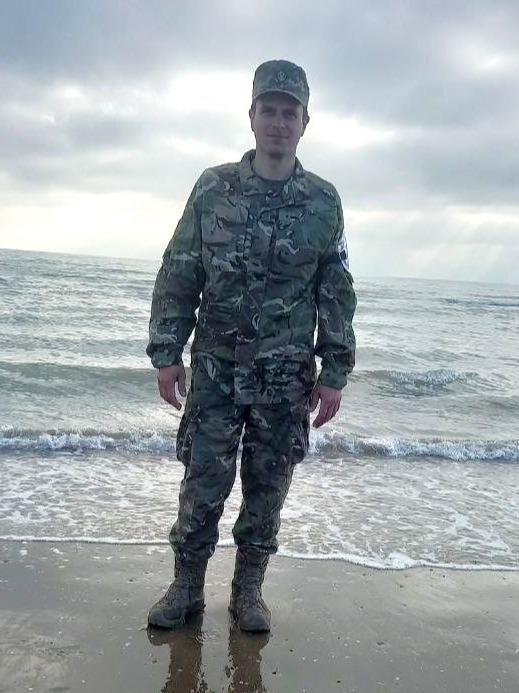
The next draft notice came in 2024. By then, my existing health problems were no longer an issue. The country urgently needed defenders, and I was needed too. Compared with the full-scale war, the ATO was a walk in the park. Back then, we were just getting introduced to the first drones, whereas now they have become indispensable to warfare."
One of the positive moments, Oleksandr says, was the basic military training course he completed in the United Kingdom. He says the focus was not on pushing soldiers to their limits, but on ensuring they were properly prepared. In addition, during their trip to the United Kingdom, our servicemen had the opportunity to visit the English Channel. The stunning sight left a lasting impression from the trip.
After completing the training, Oleksandr was deployed to the Kursk sector. He served as a driver-mechanic on BMP-1 and BMP-2 infantry fighting vehicles.
"As the guys used to say, it was like working as a taxi driver for near and far destinations. Yes, you can't get by without a sense of humour there. And my call sign, 'Udav' ('Python'), stuck to me by chance: someone said I was just as calm, and that stuck."
He tried not to grow too close to new people, including his comrades-in-arms, as the bitter experience of loss weighed on him. He spent more time around the vehicles. The most difficult memory from his first war dates back to a leave in 2015, when he had to personally tell the girlfriend of a fallen comrade that he had been killed. Oleksandr says it took him three days to recover from it.
Oleksandr cautions against underestimating the enemy: the Russians learn quickly, having put all sectors of their economy on a war footing and benefiting from enormous human resources.
"The enemy learns from us very quickly. In fact, after adopting the methods that initially gave us an advantage in the Kursk sector, they later adapted them and used them against us."
Wounded by an FPV drone and the road home
Oleksandr was wounded in the Kursk sector on 25 February 2025. It started when an FPV drone hit their vehicle. In total, about half a dozen drones were coming after them that day.
We were ordered to dismount and took cover in a tree line. We thought the drone would fly past, but it approached from the side and struck. When the doctor saw me, he asked, ‘How many drones hit you?’ I said, ‘Just one.’ Fragments were scattered so much that it looked as though there had been several drones. It hit everything: my arm, leg, and head," the serviceman recalls. "I am still recovering. My fingers have not regained full functionality, and I suffer from constant headaches. My wife says I came back more nervous. It wasn’t like that after the ATO."
He spent a month and a half in military hospitals in Poltava, followed by rehabilitation at several hospitals in Kryvyi Rih. Throughout that time, his wife remained by his side. She took care of all the paperwork, communicated with doctors, and secured his discharge from military service.
Life and faith in victory
In February 2026, Oleksandr finally returned home and to his home plant. His colleagues gave him a warm welcome and asked whether he was ready to take the controls of a 12-cubic-metre excavator. He gave it a try, and everything worked out just fine. He worked in Section No. 1 for the extraction and loading of rock mass onto haul trucks for more than half a year.
At present, ore is temporarily not being mined at Northern Iron Ore’s Hannivskyi open-pit mine due to production cutbacks. Oleksandr, along with his colleagues, is involved in equipment preservation, as well as various housekeeping and maintenance tasks.
Today, the greatest joy for the veteran is having access to water and electricity, living in peace, and not having to worry about something striking out of nowhere.
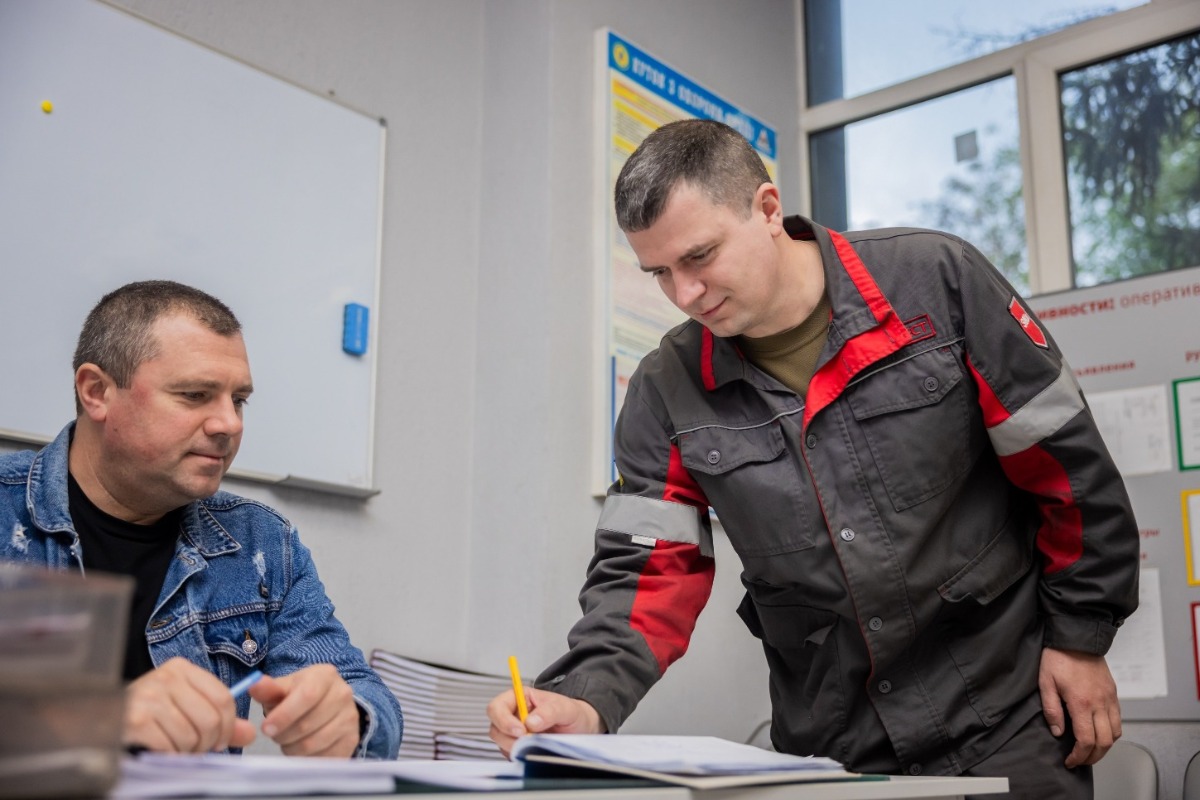
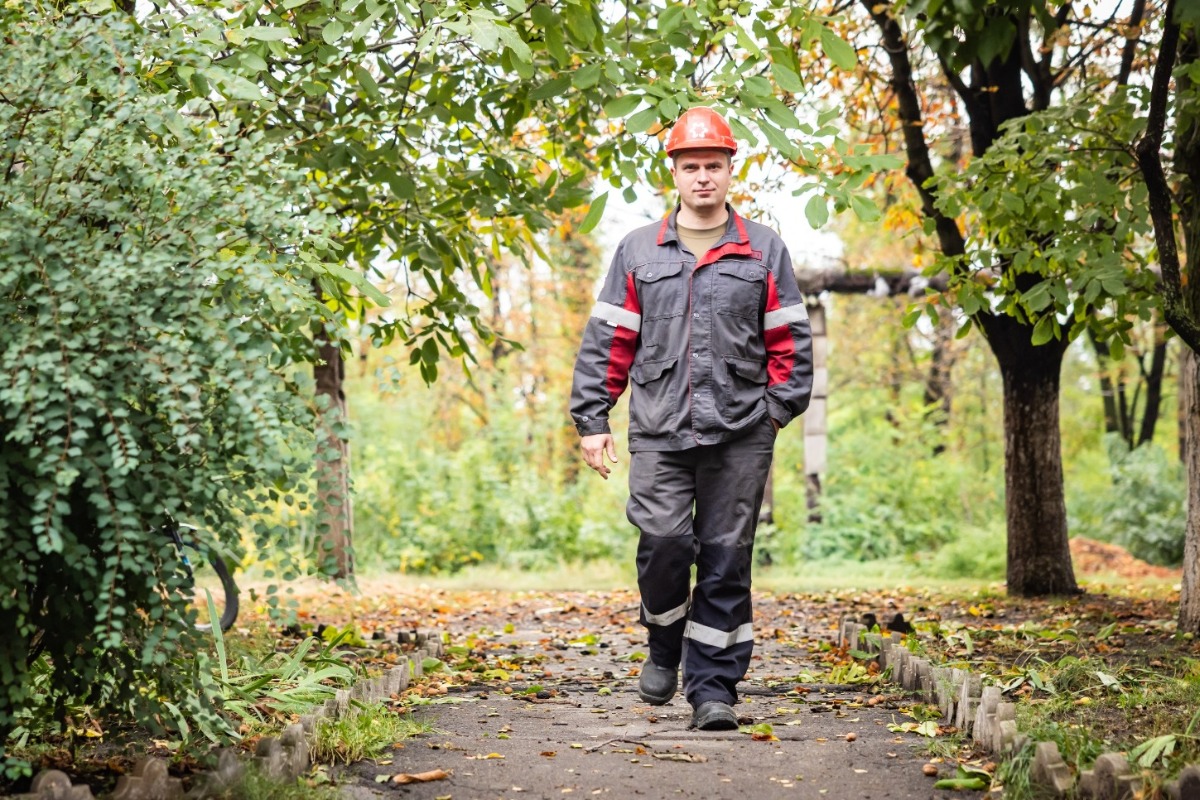
"I'm gradually getting back to normal. My job, my colleagues, and my home environment are all helping me with that. The years I spent at war taught all sorts of things. I went through a school of military field life and a "course" in construction there. And you know, I've noticed that I can't stand camping trips anymore, building campfires and that sort of thing. As far as I'm concerned, the best kind of rest is when you have comfortable conditions. The greatest exhaustion comes from being under constant stress and having to stay focused for long periods of time. Now that I no longer have to worry about the vehicles or the people who rely on me, I can get some real rest. It's easier at home."
Although he has not yet regained full use of his hand and some things around the house remain difficult to do on his own, Oleksandr remains optimistic. Oleksandr and his daughter even joke about his condition. Stefaniia takes his hand, squeezes it, and then straightens his fingers with a laugh: "You're so weak!"
"Right now, I don't feel like making plans. We're simply living, enjoying every day together at home," said Oleksandr. "We'll see what comes next, and we're really looking forward to victory and the end of the war."