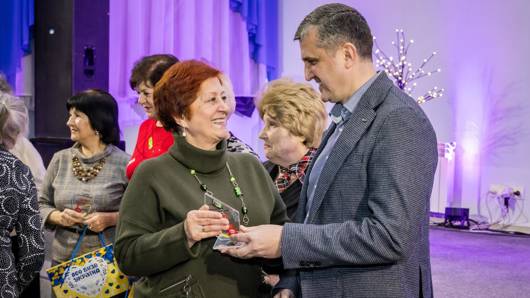

Dialogue Without Barriers: in Zaporizhzhia, participants discussed wartime experiences and life after the front line. War without embellishment, life after the front line, and dialogue that helps people understand one another.
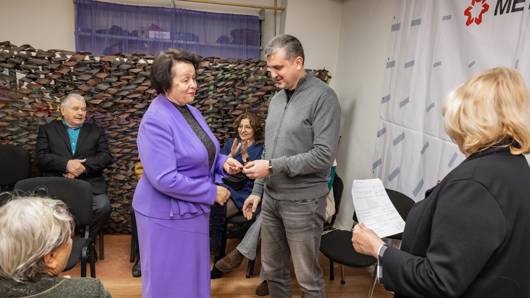
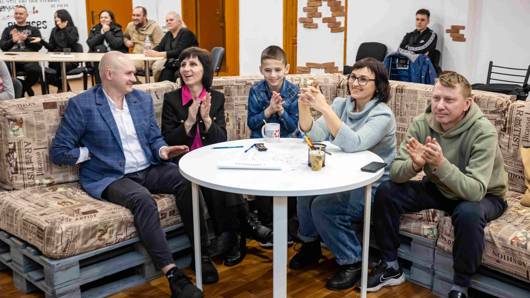
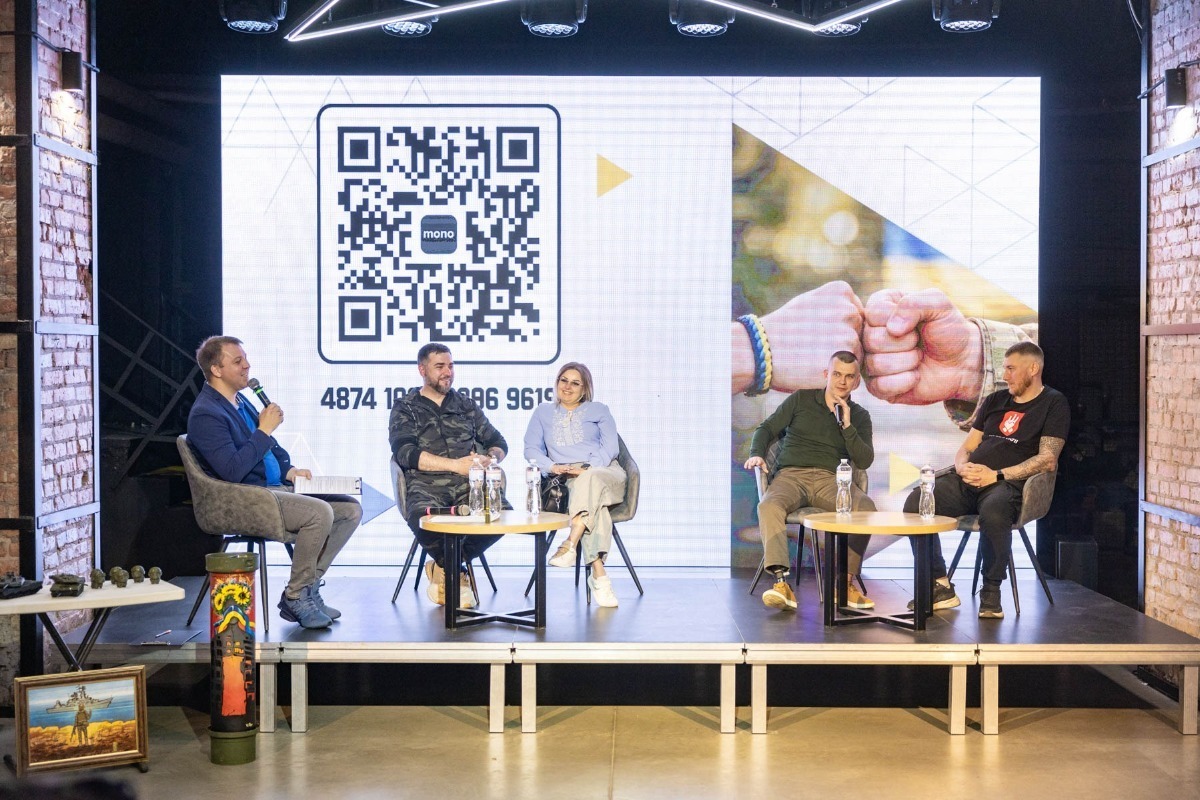
At the Unbreakable Hub “Orbit”, an open panel discussion entitled “Unconquered: A Barrier‑Free Dialogue” was held, organised by Zaporizhstal’s youth and veterans’ community.
Veterans, active‑duty service members, young people and local residents spoke candidly about: war, the return to civilian life, the challenges of reintegration, and the support without which this process is almost impossible.
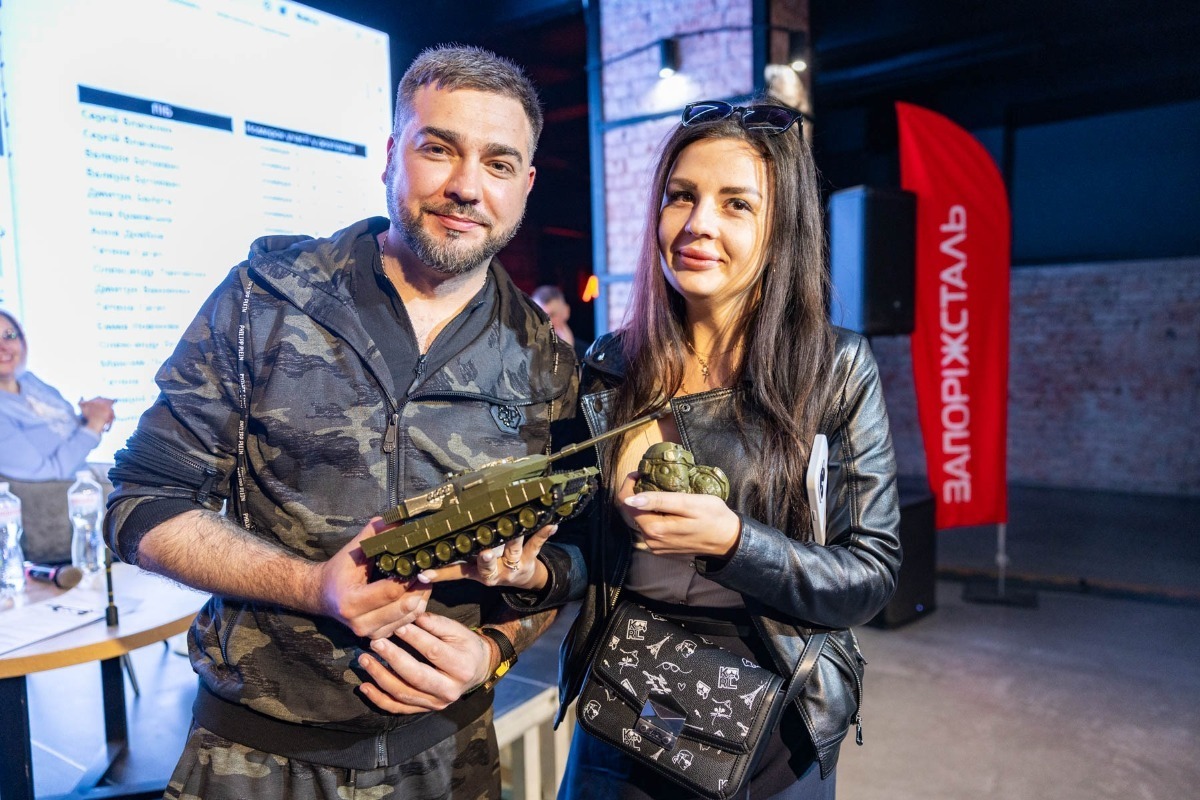
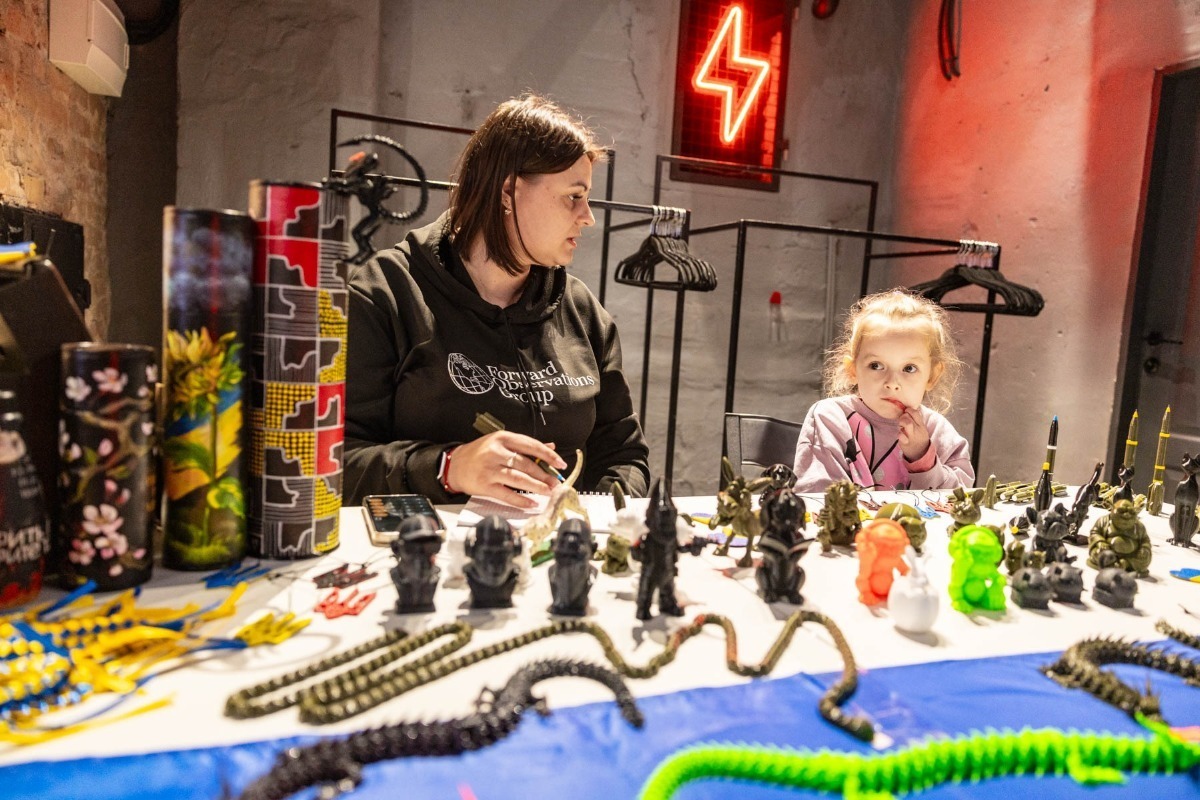
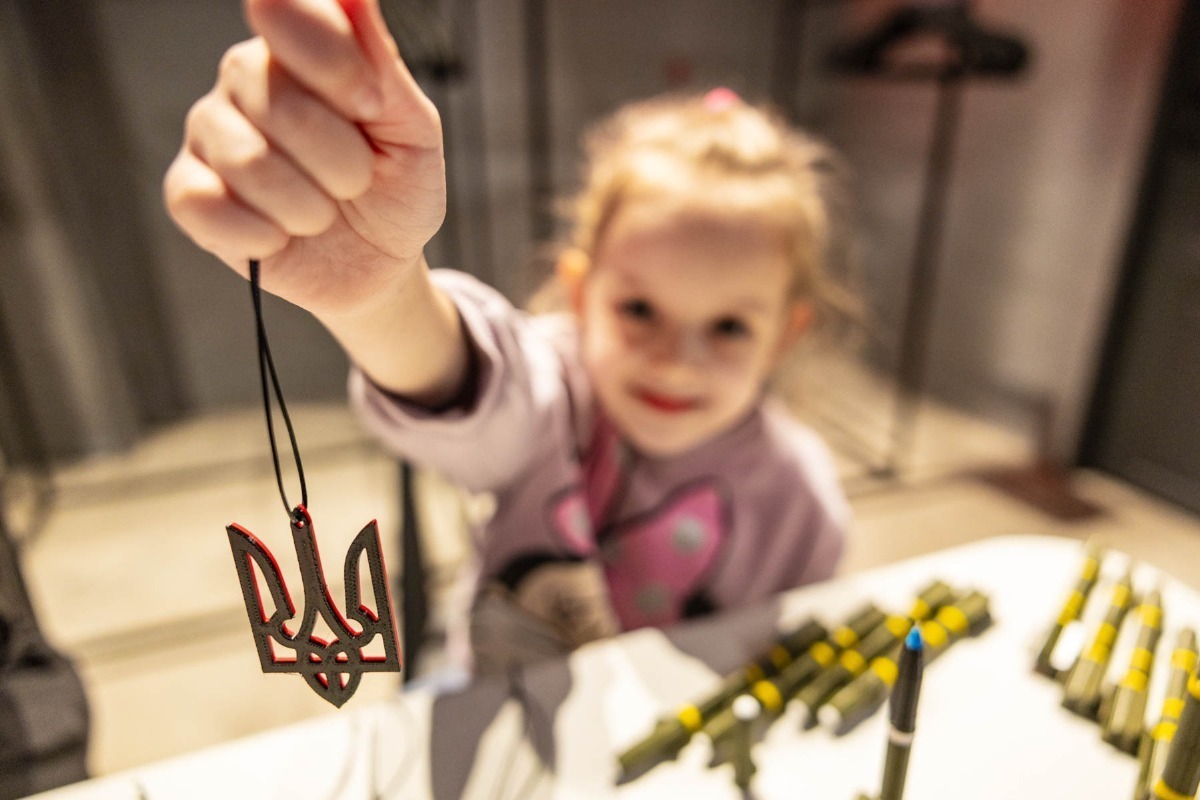
Alongside the discussion, a charity auction was held to raise funds for a vehicle for a drone troop defending Zaporizhzhia sector. It is in this very unit that one of the discussion participants, Mykola Tkachenko, is currently serving.
A volunteer twice-over
Active‑duty service member Mykola Tkachenko is a volunteer twice over. He joined the front line in the earliest hours of the full‑scale invasion. Before the war, he worked at Zaporizhstal as a hot‑rolling mill control room operator. So the morning of 24 February found him on his way to work.
“At five o’clock in the morning, I heard the first aircraft overhead – and immediately decided to go to the enlistment office. I set a clear course for myself: I will return only when all enemies have left our country.
I called my manager straight away and told him I was leaving. Within a few days, I was already in the combat zone. There was virtually no training at the time. We were among the first to encounter the enemy, and the task was straightforward – to prevent him from reaching the city,” Mykola recalls.
During the execution of one of his combat missions, Mykola sustained an injury. This was followed by medical treatment, rehabilitation, and a return to work at the enterprise. However, a year later he made the decision to return to the front and signed a contract.
“I was part of a separate assault group, and our task was to move into a designated position, support our troops, and subsequently evacuate the wounded. However, once we had taken up the position, two enemy tanks advanced on us and opened fire on our group at close range. That was how I was wounded.
I was discharged and it took a long time to recover. But as soon as I was able to, I chose a unit myself and returned. I am once again serving in a platoon of unmanned aerial systems."
Mykola explains his motivation simply:
“My source of strength is the people around me. Brothers-in-arms. And everyone who supports us in the home front. We can hold the front, but we cannot hold the home front. The home front must provide support – only together will we prevail."
A separate issue is the provision of supplies to the units. Mykola explains that equipment on the front line is quite literally a matter of life.
“In August 2025, an active offensive began in Zaporizhzhia direction. We lost a lot of vehicles. Three pick-up trucks in a one month. One was destroyed by a mine, the second by an FPV drone, and the third also detonated while entering a position. The vehicle was thrown aside, and it was impossible to evacuate it. It is fortunate that everyone survived.
We were left with almost no vehicles. And this affects resupply, the evacuation of the wounded, and movement between positions. That is why I launched a fundraising appeal for a vehicle,” says Mykola.
“I was standing in a shop and did not know what to do”
Yuliia Prus is a volunteer who joined the 110th Separate Territorial Defence Brigade of the Territorial Defence Forces of the Armed Forces of Ukraine in March 2022. She took an active part in combat operations in Zaporizhzhia direction and sustained two concussions.
After returning from the front, Yuliia took up employment at Zaporizhstal. She does not wish to recall the war, saying that she has resolved to move forward.
Juliiа recently enrolled at a university in order to become a military psychologist. The veteran says that this decision is directly linked to her own experience of the war.
“I have experienced trauma related to the war. As a result, I understand people very well – the traumas they endure, what they are experiencing, and what they may yet experience. These are matters that do not entirely pertain to civilian life; they involve deeper processes. I realised that I wanted to help people cope with these states. Because returning from war is an extremely challenging moment. It is a traumatic event, after which a person must, in effect, rediscover themselves in civilian life,” Yuliia says.
Yuliia admits that it was not easy for her herself.
“When I returned, I was unable even to go to a shop. I stood there, uncertain about what to do. I looked at the shelves and couldn't gather my thoughts. You need to buy food, the fridge at home is empty, the children… and yet you simply feel lost. It was very difficult. Little by little, I began to adapt and to return to this life.
I went through it. And for this reason, I want to help others walk this path,” the veteran shares.
Captivity, Dreams and Return
Andrii Proskura had been fighting since 2017 as part of the ATO/OOS. The full‑scale war found him near Mariupol, where he served as a gun commander in the 55th Artillery Brigade.
“By three o’clock in the morning on the 24th, we were already near Mariupol. I served as a gun commander. We carried out our missions in the city, followed by the blockade,” Andrii recalls.
Later, Andrii was taken captive together with his brothers-in arms, where he remained for nearly three years. His release was followed by six months of medical treatment and rehabilitation.
Nevertheless, the war continues to leave its mark.
"I often dream about what I have been through That I am back there again. I do not hide this – even my supervisors are aware of it. Sometimes I simply cannot sleep,” Andrii says.
It was his family, along with the support of loved ones and colleagues, that became the source of strength helping Andrii move forward.
“I believe that all of this will pass with time. The most important thing is to return,” Andrii says. “My source of strength is my family. I knew that they were praying for me. It was of great help in enabling me to carry on."
Andrii says that adapting after returning is difficult, and that there is often a shortage of information on where to seek support. However, at times support arrives on its own:
“Just a week after my return, I was contacted by representatives of the ‘Hearts of Azovstal’ initiative. They already knew who had returned. They explained which documents were required and provided gradual support – with rehabilitation as well as with other matters."
Unusual Football
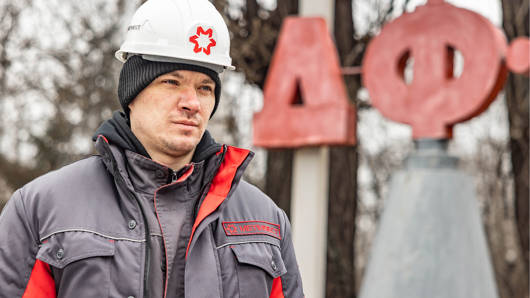
Before the full‑scale war, Maksym Yaroshenko worked at Zaporizhstal. He joined the armed forces in the first days of the invasion. He initially served in the Territorial Defence Forces and later as a sapper in the 703rd Separate Operational Support Regiment.
In July 2023, during the counter‑offensive in Zaporizhzhia direction, while carrying out demining operations near Robotyne, Maksym was wounded by an enemy mine explosion and lost a leg.
This was followed by prosthetic fitting, rehabilitation, and a return to work at the steelworks. Another source of strength is sport. Maksym plays for a Zaporizhzhia‑based amputee football team.
“I was invited to try playing at a prosthetics centre. At first, I thought: how can you play football if you do not have a leg? But I came along, watched, and realised that it was possible,” the veteran says.
Amputee football, he explains, has its own rules – all players move using crutches.
“This is done so that everyone has the same conditions. And the sport is now developing rapidly – there are teams in many cities, as well as championships and leagues. Everything is like in ordinary football – just for veterans,” Maksym shares.
The Power of Support
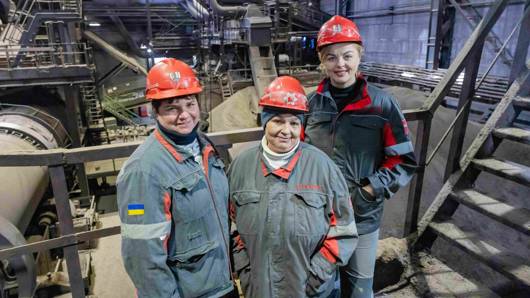
Today, more than 220 veterans of the Russian–Ukrainian war are employed at Zaporizhstal. Here, they are welcomed, supported, and helped to return to peaceful civilian life.
One of those working with veterans at Metinvest’s facilities in Zaporizhzhia is Kostiantyn Matlai. Having experienced the war himself and sustained an injury, he now helps others adapt to civilian life.
“I went to the front in October 2023. I underwent training, after which my service began.
I was wounded while carrying out combat missions. It was a direct hit by an FPV drone. It flew into our position, into the dugout. I was wounded at the time. After that, there was an evacuation and a lengthy period of rehabilitation,” Kostiantyn recalls.
After his recovery, Kostiantyn returned to civilian life – and to his work at the enterprise.
Today, he helps veterans returning from the front to adapt to work and reintegrate into the usual rhythm of life. He says that such situations often require not only formal intervention, but also a thoughtful, human approach:
"After completing my rehabilitation, I returned to Zaporizhstal, where I was offered a role in veteran policy
I help returning veterans adapt to work and put processes in place. At times, difficult moments arise. But all of this can be faced and overcome together – and that is precisely what I focus on."
Kostiantyn emphasises that the presence of such specialists is not a formality but a necessity – especially given the large number of veterans returning to civilian life:
“Such specialists are important because veterans need to have someone they can turn to. If a veteran is left alone with their problems, it becomes far more difficult. This way, there are people and an environment one can come to and receive support.”
It is worth reminding that Zaporizhstal and other Metinvest enterprises operate the corporate programme “Hero’s Path: Ecosystem for Integrating Veterans" which provides support from the moment an employee is drafted until their return and further adaptation to a team after service in the Ukrainian army.
The programme includes communication with soldiers and their families to offer timely assistance in preparing for service. The company also supplies veterans with personal protective gear and material support for rehabilitation.
Upon returning from the front, veterans receive a comprehensive medical examination, psychological support, health treatment, prosthetics, retraining, mentoring, and free education at Metinvest Polytechnic, all at the company's expense.
Education and a Conscious Choice
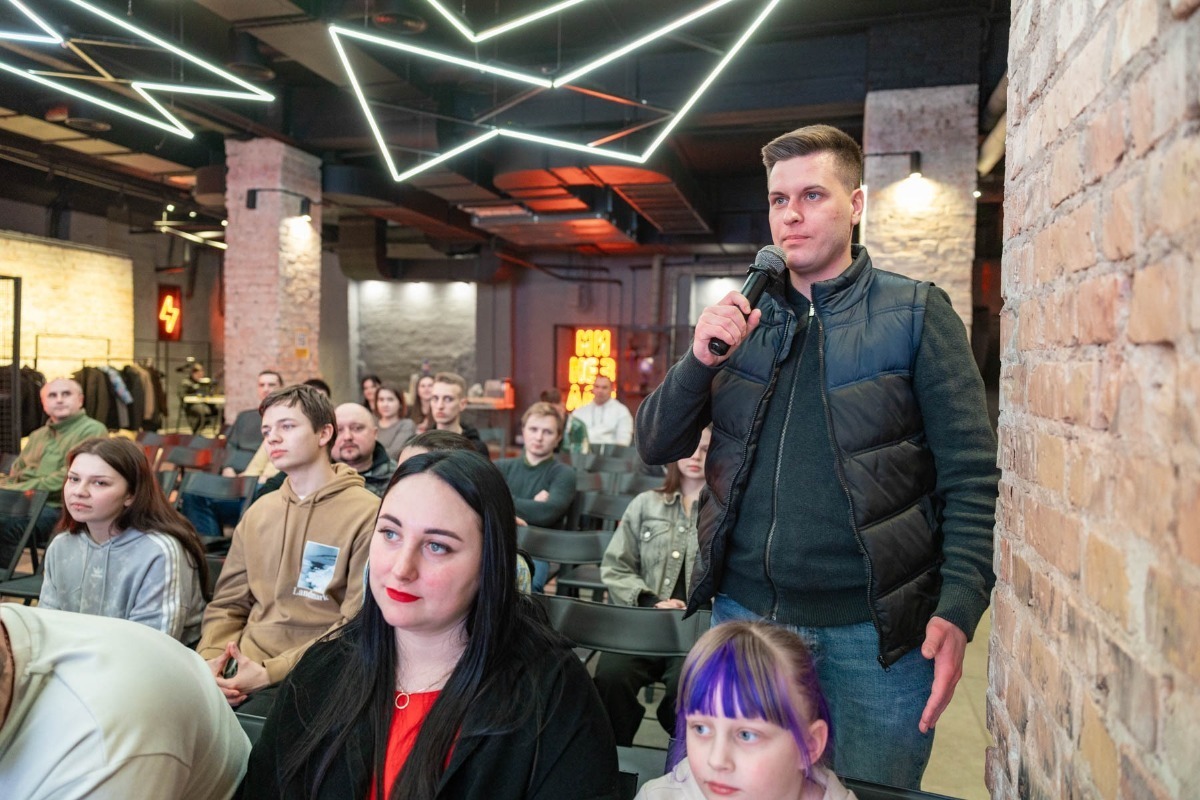
The discussion lasted for around two hours – yet the time passed unnoticed. In an open‑dialogue format, the veterans not only spoke about their experiences but also shared advice – particularly for young people – which was articulated very clearly.
The first is to gain an education as a priority, as without it adapting after the war becomes significantly more difficult. The second is that, if one wishes to go to the front, it should be done consciously: through the recruitment system and with the possibility of independently choosing a unit.
According to participants in the discussion organised by Zaporizhstal’s youth movement and veteran association, such events are not merely conversations but an important “bridge” between military personnel and civilians.
As was repeatedly noted during the discussion, this mutual support is one of the key factors that helps people endure.